On this page
German startup Orbital Matter has achieved a historic first: a free‑flying satellite 3D‑printed a rigid, half‑meter beam in the vacuum of space. The demonstration, reported by TechCrunch, marks a shift from folded‑up deployables to on‑orbit manufacturing, a capability that could unlock larger power systems and orbital data‑center platforms.

Mission Overview
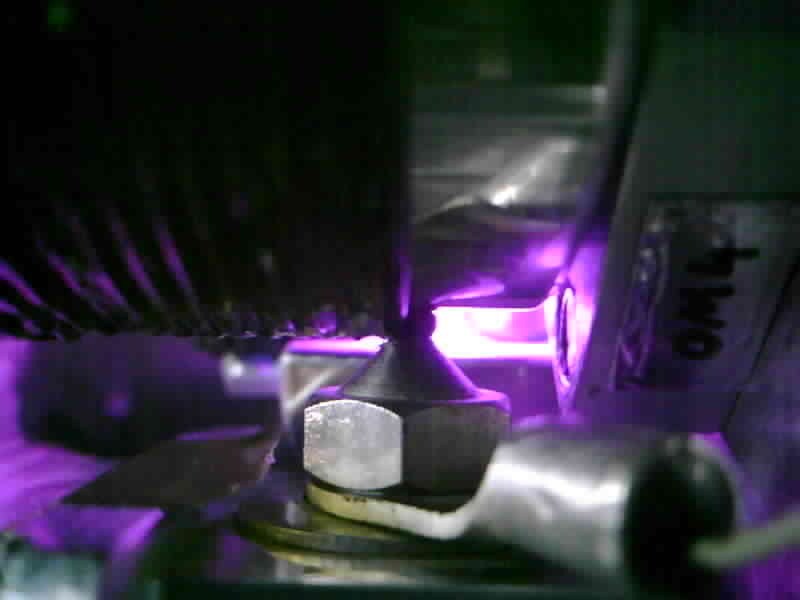
Replicator 2 launched on a SpaceX rideshare mission in mid‑2026 carrying four identical printers. Each printer extrudes a photopolymer resin that is instantly cured by an onboard UV source, creating a solid cylindrical boom. The satellite’s primary goal was to validate that the process works in a true vacuum without the safety net of the International Space Station’s pressurized modules.
According to the TechCrunch report, the company deliberately flew multiple printers to accelerate learning in orbit rather than spending years on ground vacuum‑chamber tests. This “learn‑in‑flight” approach let engineers update printer firmware after each run, a luxury not available on the ISS.
The Printing Technology
The printer’s feedstock is a custom resin formulated to remain stable in microgravity and to cure rapidly under UV light. The extrusion head deposits material in a continuous coil, building a beam that the company likens to reinforced concrete: resin acts as cement, UV light as water. The resulting structure is rigid enough to support a deployable solar array, a key use case for future high‑power satellites.
Orbital Matter’s CTO, Robert Ihnatisin, told TechCrunch that the current resin load limits boom length to roughly half a meter, but engineering models suggest 100‑meter booms are feasible with larger resin tanks. For context, SpaceX’s Starlink V2 satellites already unfurl 20‑meter solar wings, so a 100‑meter printed boom would represent a fivefold increase in deployable span.
Partnerships and Collaboration
The project is a joint effort with the European Space Agency (ESA) and Thales Alenia Space, a major European satellite manufacturer. Thales Alenia contributed the satellite bus and integration expertise, while ESA provided oversight and funding through its in‑space manufacturing program. This public‑private partnership underscores the strategic importance Europe places on sovereign on‑orbit construction capabilities.
Orbital Matter was co‑founded in 2022 by Ihnatisin, a former Formlabs engineer, and CEO Jakub Stojek. The team raised a $3 million seed round to develop the printer hardware and flight software, positioning the company as a niche supplier of “printer‑assisted deployment systems” (PADS) for commercial and institutional missions.
Challenges and Anomalies
During the mission, two printers were tasked with deploying a flexible solar array. One printer suffered an anomaly and failed to complete its print, but the other succeeded, extending the array and delivering power to the spacecraft. The partial failure highlights the risk of relying on a single printer for mission‑critical structures and validates the company’s strategy of flying redundant units.
Previous microgravity 3D‑printing experiments were confined to the ISS’s pressurized environment, where temperature, pressure, and contamination are controlled. Operating in open vacuum introduces thermal cycling, outgassing, and radiation effects that can alter resin viscosity and cure depth. The flight data from Replicator 2 will be essential for refining material formulations and printer thermal management.
- First free‑flying 3D‑printed rigid beam in vacuum.
- UV‑cured resin extrusion, analogous to concrete curing.
- Redundant printers mitigate single‑point failures.
- Partnerships with ESA and Thales Alenia Space.
Why This Matters
Large orbital platforms — whether communications constellations, scientific observatories, or future space data centers — need expansive solar arrays and radiators to generate and reject megawatts of power. Traditional deployables are limited by launch‑fairing volume and require complex folding mechanisms that add mass and failure modes. In‑space printing bypasses those constraints by launching compact raw material and building structures to the exact dimensions a mission demands.
Orbital Matter’s demonstration proves that the core physics of resin extrusion and UV curing work in vacuum, removing a major technical unknown. If the technology scales to 100‑meter booms, a single launch could deliver the structural backbone for a 5 kW solar wing today and a 100 kW wing by 2030, dramatically reducing the cost per kilowatt of on‑orbit power.
All performance claims and quotes are drawn from the TechCrunch article dated 3 November 2026; Ayxworks has not independently verified the flight data.
Future Roadmap
Orbital Matter plans a follow‑up demonstration slated for launch in 2028. The next satellite will host a larger printer on a bigger bus, targeting a deployable solar array capable of 5 kW. The company describes this as a stepping stone toward 100 kW‑class wings by the end of the decade, a power level that could support orbital edge‑computing nodes or high‑throughput broadband payloads.
Beyond power, the PADS concept is being pitched to satellite builders for extending antennas, sensors, and even modular habitat trusses. By integrating a printer into the spacecraft design, operators can tailor appendage length and stiffness after launch, adapting to mission changes or on‑orbit damage assessments.
Watch for ESA’s upcoming in‑space manufacturing calls; they often fund flight opportunities for technologies like Orbital Matter’s PADS.
What to Do Next
Engineers evaluating high‑power satellite architectures should model the mass‑volume trade‑off of launching resin versus pre‑deployed arrays. The ability to print on demand could shrink launch fairing requirements and enable iterative design cycles — print, test, reprint — without additional launches.
Policy makers and program managers should track the 2028 demonstration as a milestone for European strategic autonomy in space infrastructure. Early engagement with Orbital Matter or similar vendors could secure access to a supply chain that is still nascent but rapidly maturing.
Want more practical guides? Explore more Ayxworks insights and save this article for later.
FAQ
What exactly did Orbital Matter print in space?
A half‑meter long, rigid cylindrical beam made from a UV‑cured photopolymer resin, produced by a printer aboard the Replicator 2 satellite.
Why is printing in vacuum different from printing on the ISS?
The ISS provides a pressurized, temperature‑controlled environment. In open vacuum the resin must withstand extreme thermal cycles and outgassing without a protective atmosphere, which changes cure kinetics and material stability.
Who are the main partners on this project?
The European Space Agency and Thales Alenia Space collaborated with Orbital Matter on the Replicator 2 mission, providing funding, satellite bus integration, and program oversight.
What happened to the printer that failed?
One of the two printers tasked with deploying a flexible solar array experienced an anomaly and did not complete its print; the redundant printer succeeded, demonstrating the value of flying multiple units.
When is the next demonstration planned?
A follow‑up mission with a larger printer and a 5 kW solar array is scheduled for launch in 2028, serving as a stepping stone toward 100 kW‑class deployables by 2030.
Can this technology be used for structures other than solar arrays?
Yes. Orbital Matter markets its Printer‑Assisted Deployment System (PADS) for antennas, sensor booms, and modular truss elements, allowing any spacecraft to extend appendages after launch.