On this page
The Asus ROG Rapture GT-BN98 Pro lands as the first consumer router built on the draft Wi‑Fi 8 specification. It packs eight fixed antennas, a quad‑band radio, and a suite of gaming‑focused tools into a chassis that looks like a futuristic spider. After weeks of testing, the device shows impressive raw speed and rock‑solid stability, but its $900 price tag makes it a niche purchase for early adopters.
Design and Build
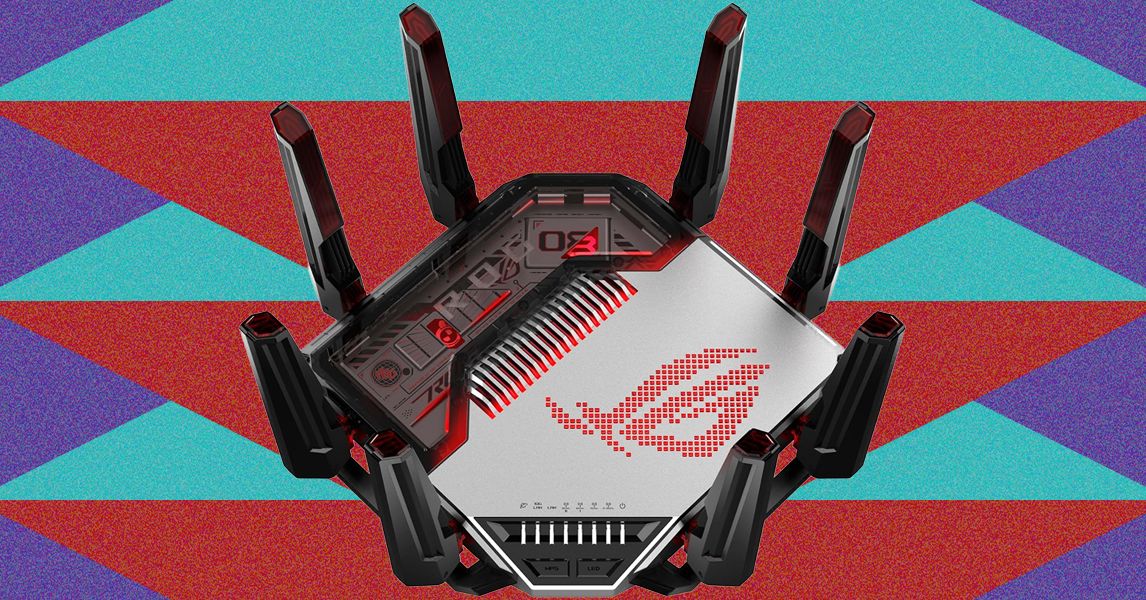
The router measures roughly 14 inches square and 9 inches tall with antennas attached, making it a dominant presence on any shelf. Eight adjustable but permanently fixed antennas give it a distinctive look, while a translucent window reveals internal heatsinks that keep the unit silent and cool during extended loads.
Asus chose a bold ROG aesthetic with an RGB logo offering seven lighting effects. The size accommodates advanced thermal channels, so the router runs without a fan and stays cool to the touch even under heavy throughput.
Ports and Connectivity
Connectivity is generous: a 10 Gbps WAN/LAN port, a second 10 Gbps LAN, four 2.5 Gbps ports (one configurable as WAN/LAN), a 1 Gbps LAN, USB 3.2 Gen 1, and USB 2.0. Link aggregation on the two 10 Gbps ports can create a 20 Gbps pipe for demanding NAS or server links.
Inside, a Broadcom BCM 6718 chip with a 2.6 GHz quad‑core CPU, 256 MB flash, and 2 GB DDR4 RAM drives the quad‑band radios. Each band runs 4×4 MU‑MIMO with OFDMA and 4096‑QAM, yielding theoretical peaks of 1.3 Gbps (2.4 GHz), 5.6 Gbps (5 GHz), and 11.5 Gbps per 6 GHz band.
- Quad‑band (2.4 GHz, 5 GHz, two 6 GHz) with 4×4 streams
- Two 10 Gbps ports plus four 2.5 Gbps ports
- USB 3.2 and USB 2.0 for tethering or storage
Performance and Speed
Real‑world testing showed up to 3 Gbps in the same room, about 1 Gbps through a wall, and 350 Mbps at the far end of a thick‑walled home. Compared with the tri‑band Wi‑Fi 7 Asus RT‑BE96U, the GT‑BN98 Pro was slightly faster at every distance and offered longer range on all bands.
Multi‑Link Operation (MLO) enabled near‑5 Gbps close‑range speeds when paired with a second GT‑BN98 Pro, though typical client devices won’t reach that level until Wi‑Fi 8 hardware ships. Automated Frequency Coordination (AFC) for 6 GHz power boosts is available in the US and rolling out in the UK, but support varies by country.
Gaming Features
The router includes adaptive Quality of Experience that automatically detects gaming devices — PCs, consoles, phones — and prioritizes their traffic. Game Boost mode uses AI to stabilize latency, GTNet optimizes server routes, and a mobile gaming mode tunes settings for handheld play.
During a four‑gamer session (two PCs, a MacBook, a PS5) the network remained smooth with no noticeable jitter. These tools address the home side of latency; upstream ISP and server performance still dominate final ping.
MLO and AFC are still maturing; benefits will grow as client devices adopt Wi‑Fi 8.
Software and Extras
Asus continues its no‑subscription philosophy. The box includes a year of NordVPN, robust AiProtection security, deep parental controls, and a full‑featured mobile app plus a detailed web UI. Users can create unlimited SSIDs (IoT, Guest, Gaming) with per‑network settings, enable band steering, and set adaptive device or activity prioritization.
Firmware stability was a pleasant surprise; early Wi‑Fi 7 Asus units required multiple updates, but the GT‑BN98 Pro performed reliably out of the box. Future updates will refine Wi‑Fi 8 compliance and AFC rollout.
Redeem the NordVPN code early; the subscription activates on first login.
Why This Matters
Wi‑Fi 8 shifts focus from raw throughput to reliability, latency reduction, and interference management. The GT‑BN98 Pro showcases how those gains translate to gaming and dense‑device environments today, even before the standard is finalized.
For power users who upgrade devices frequently, investing now means the router will stay relevant as Wi‑Fi 8 laptops, phones, and consoles arrive. For average households, the current Wi‑Fi 7 ecosystem already meets most needs at a lower cost.
What to Do Next
If you demand the absolute latest wireless tech and have a budget for early adoption, the GT‑BN98 Pro is a solid, future‑proof choice. Otherwise, consider the Wi‑Fi 7 Asus RT‑BE96U (about $300 less) or the quad‑band Wi‑Fi 7 ROG Rapture GT‑BE98 Pro (roughly $200 less) which deliver comparable performance today.
Check the current retailer price before buying, as pricing can shift quickly for flagship networking gear.
Want more practical guides? Explore more Ayxworks insights and save this article for later.
FAQ
Does the Asus ROG Rapture GT‑BN98 Pro support Wi‑Fi 8 out of the box?
It runs on the draft Wi‑Fi 8 specification and will receive firmware updates as the standard finalizes.
Can I use this router with my existing Wi‑Fi 6 or Wi‑Fi 7 devices?
Yes, it is backward compatible and will serve older clients on 2.4 GHz, 5 GHz, and 6 GHz bands.
Is the NordVPN subscription truly free for a year?
The package includes a redeemable code for a 12‑month NordVPN plan; activation occurs on first login.
How loud is the router during heavy use?
The advanced heatsink design keeps it fanless and silent; it stays cool to the touch even under load.
What is the benefit of the second 6 GHz band?
The extra 6 GHz radio can serve as a dedicated wireless backhaul for AiMesh, reducing congestion on the primary 6 GHz band.