On this page
Keeping a sourdough starter alive can feel like caring for a demanding pet, especially when work and family leave little time for daily feedings. Wired’s Kat Merck spent three weeks with the King Arthur Baking Sourdough Sidekick, an automatic feeder co‑developed with GE’s FirstBuild lab, to see if it could end a year‑long baking slump. This breakdown distills her findings into practical takeaways for anyone weighing the $180 investment.
For home bakers who’ve abandoned sourdough because life got in the way, this device addresses a genuine friction point: the mental load of remembering to feed a living culture week after week. The author’s experience — a decade of baking experience undone by a year of neglect as a working parent — mirrors a common pattern where starter maintenance becomes another forgotten chore. If automatic feeding reliably removes that failure mode, it could return sourdough to regular rotation for people who have the skill but not the bandwidth.
Overview of the Sourdough Sidekick
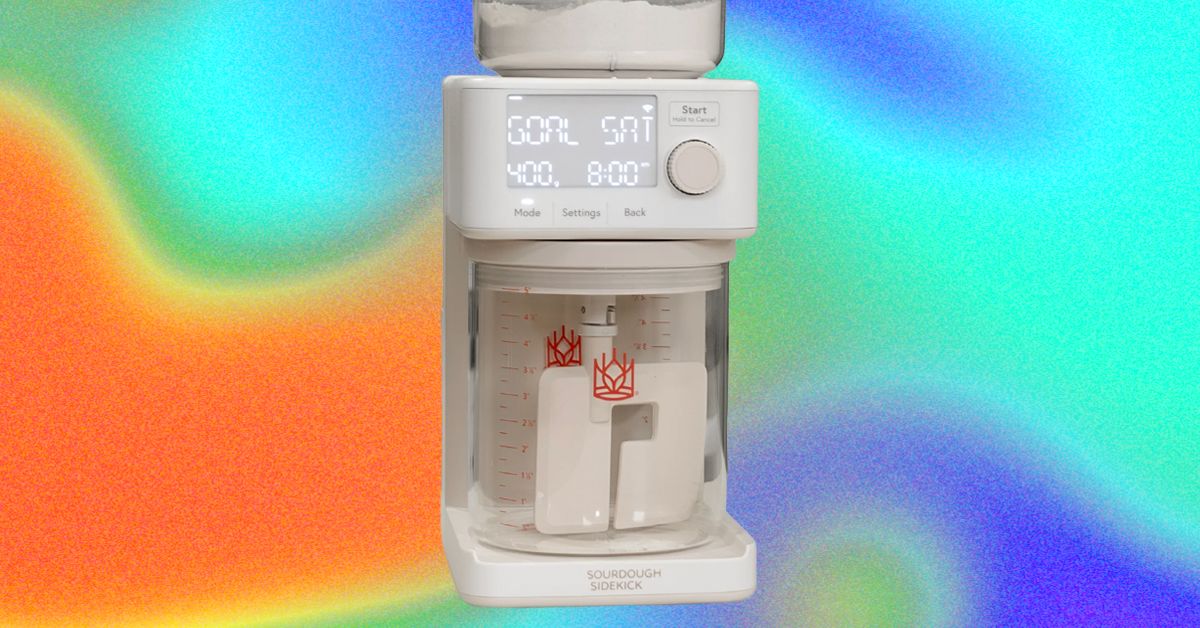
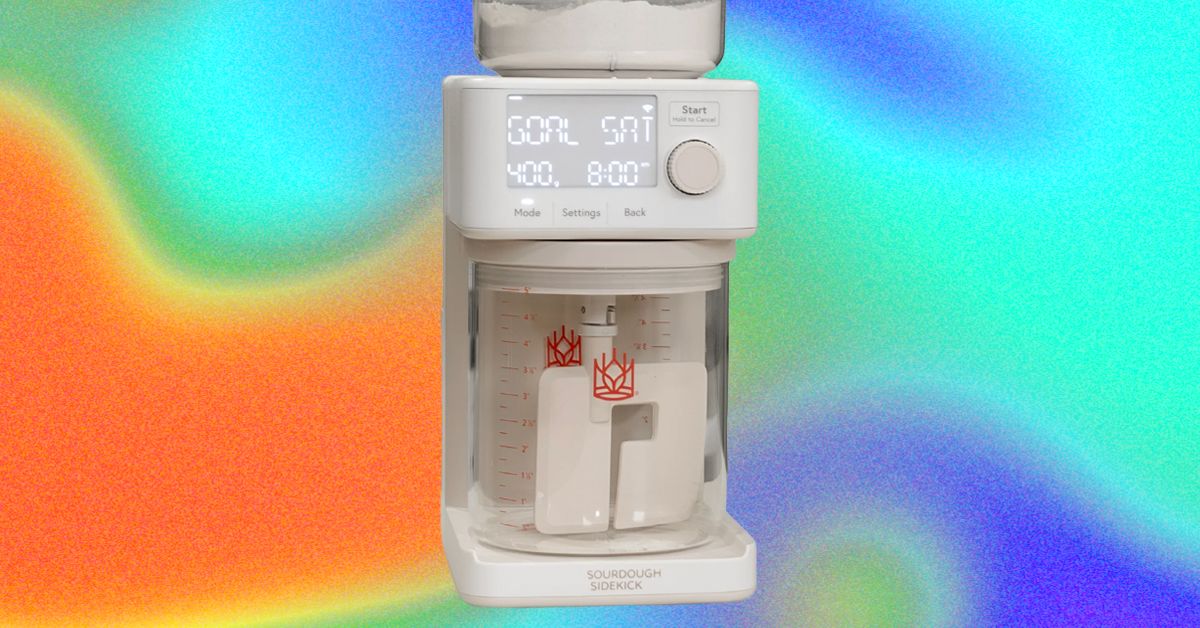
The Sidekick is a countertop appliance roughly the size of a coffee maker, housing a water reservoir, flour hopper, and a glass crock with a stirring paddle. Merck notes that the device uses GE’s generic SmartHQ app, which she found optional and limited to firmware updates and status notifications (Wired review).
Its core promise is a hands‑off starter that stays ready for baking up to a week ahead. The package includes a Quick Start booklet and a full instruction manual; Merck recommends reading the latter before first use to avoid early hydration issues.
Setup and Calibration
Initial setup involves filling the reservoirs, setting the current date and the target “ready” date (up to seven days out), adding a seed starter, and pressing Auto Mode. Merck’s first run dispensed flour but no water, leaving a dry dough ball until a firmware update corrected the sequence (Wired review).
Calibration requires weighing the machine’s flour and water output with a kitchen scale—a one‑time, multi‑step process she describes as “irritatingly lengthy.” Once dialed in, the unit consistently delivered 30 g each of flour and water per feeding.
Daily Operation and Modes
Auto Mode feeds once daily and runs a stirring cycle every two hours, announced by a loud beep and mechanical whir that can startle anyone nearby. The paddle effectively incorporates flour and water, and the cycle can be disabled via onboard controls if noise is a concern (Wired review).
Ratio Mode lets users set feed ratios (1:1:1, 1:1:2, etc.), while Custom Mode offers precise gram‑level control over flour, water, and timing—ideal for switching between flour types. Merck favored Custom Mode for its flexibility across recipes.
Performance and Bread Results
By week’s end the crock held roughly 400 g of starter, enough for two boules and a sandwich loaf with seed left over. Bread baked from this starter performed identically to loaves made with traditionally maintained starter, confirming that automation does not compromise flavor or rise (Wired review).
If baking is delayed, the starter can be refrigerated under its metal lid and revived later, or excess discard can be used in other recipes. The device also includes instructions for creating a new starter from scratch.
Limitations and Quirks
The Sidekick lacks active temperature control; it only displays ambient temperature and adjusts feed volumes accordingly. In cold kitchens this may slow fermentation compared with dedicated proofing boxes like the Goldie or Brod & Taylor Sourdough Home (Wired review).
Switching flour types (e.g., whole wheat or rye) forces a full recalibration. The optional Crock Grip Band ($15) helps secure the glass crock but is not essential. All removable parts are top‑rack dishwasher safe, easing cleanup.
Why This Matters
For busy home bakers, the biggest barrier to consistent sourdough is the daily feeding ritual. An automated feeder removes that friction, turning a once‑a‑week chore into a set‑and‑forget routine, which can dramatically increase baking frequency.
However, the $180 price tag is roughly $175 more than a jar and spoon. The value proposition hinges on how much you value time savings versus the manual method’s simplicity and zero cost.
What to Do Next
If you decide to purchase, budget for a kitchen scale to complete the mandatory calibration, and plan a quiet spot for the device if the mixing beep will be disruptive. Keep a backup starter in the fridge during the first week as insurance.
Consider whether you need temperature control; if your kitchen runs cold, a separate proofing box may still be required. Evaluate the ongoing cost of flour and water versus the convenience gain before committing.
- Automates daily feedings and stirring, delivering up to 400 g starter per week.
- Requires one‑time scale calibration; switching flours forces re‑calibration.
- No active temperature control—relies on ambient conditions.
- Loud beep and motor noise during each stir cycle.
- All removable parts dishwasher safe; optional $15 grip band available.
Merck’s three‑week test ended a year‑long baking hiatus, suggesting the device can revive lapsed sourdough habits for time‑pressed bakers.
Run the firmware update before first use; it enables water dispensing and power‑loss recovery up to 12 hours.
Want more practical guides? Explore more Ayxworks insights and save this article for later.
FAQ
Does the Sidekick replace a traditional starter jar completely?
Yes, it can maintain a starter indefinitely, but Wired’s reviewer kept a backup jar in the fridge as a safety net during the first week.
Can I use the Sidekick with whole‑wheat or rye flour?
You can, but each flour change requires a full recalibration of flour and water output.
Is the SmartHQ app necessary for daily operation?
No. The app is only needed for firmware updates and status checks; all feeding modes are controlled on the device itself.
How loud is the mixing cycle?
The reviewer described a loud beep followed by a mechanical whir every two hours, which can be startling in a quiet kitchen.
What happens if power goes out?
A recent firmware update adds power‑loss recovery for up to 12 hours; the reviewer confirmed it worked after a breaker trip.