On this page
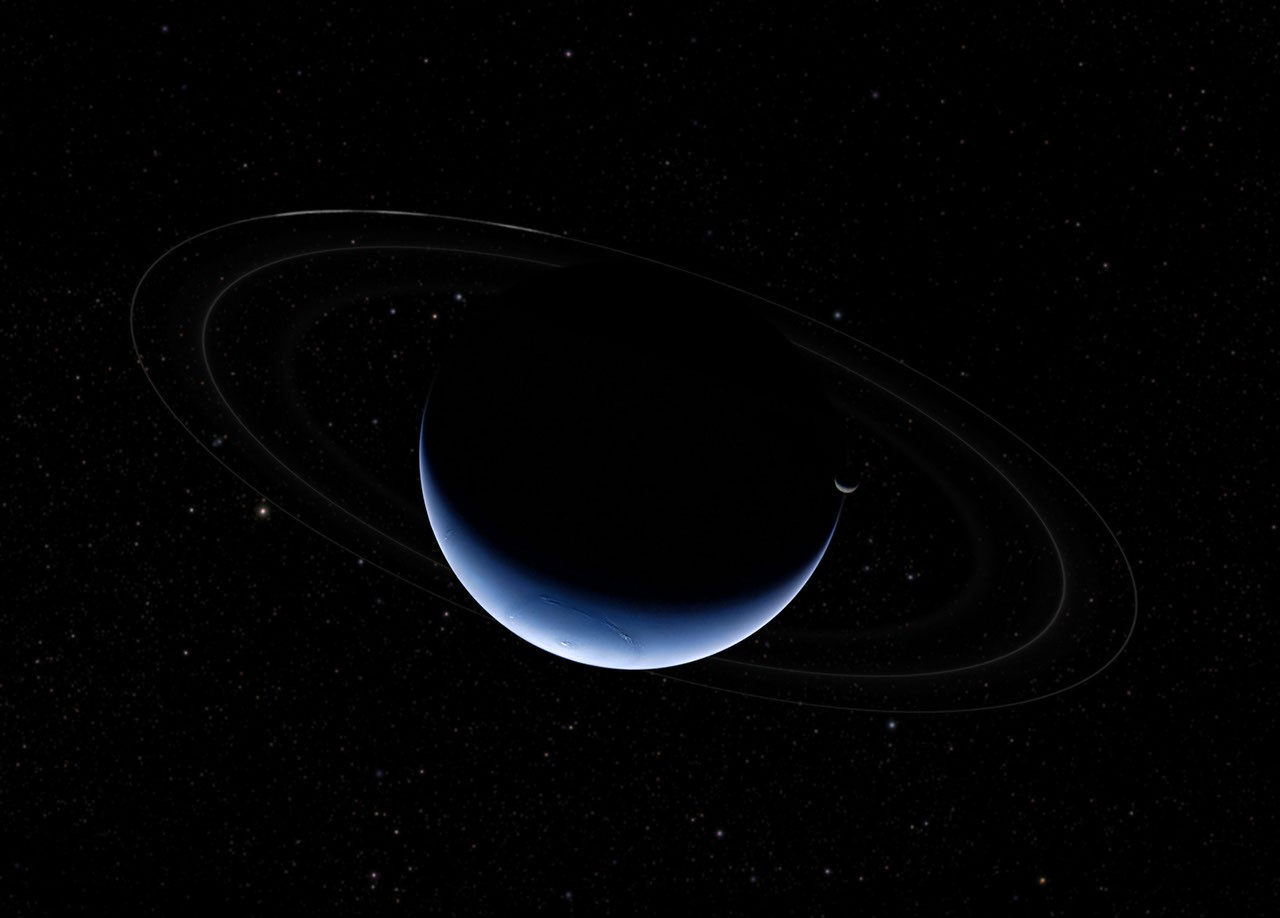
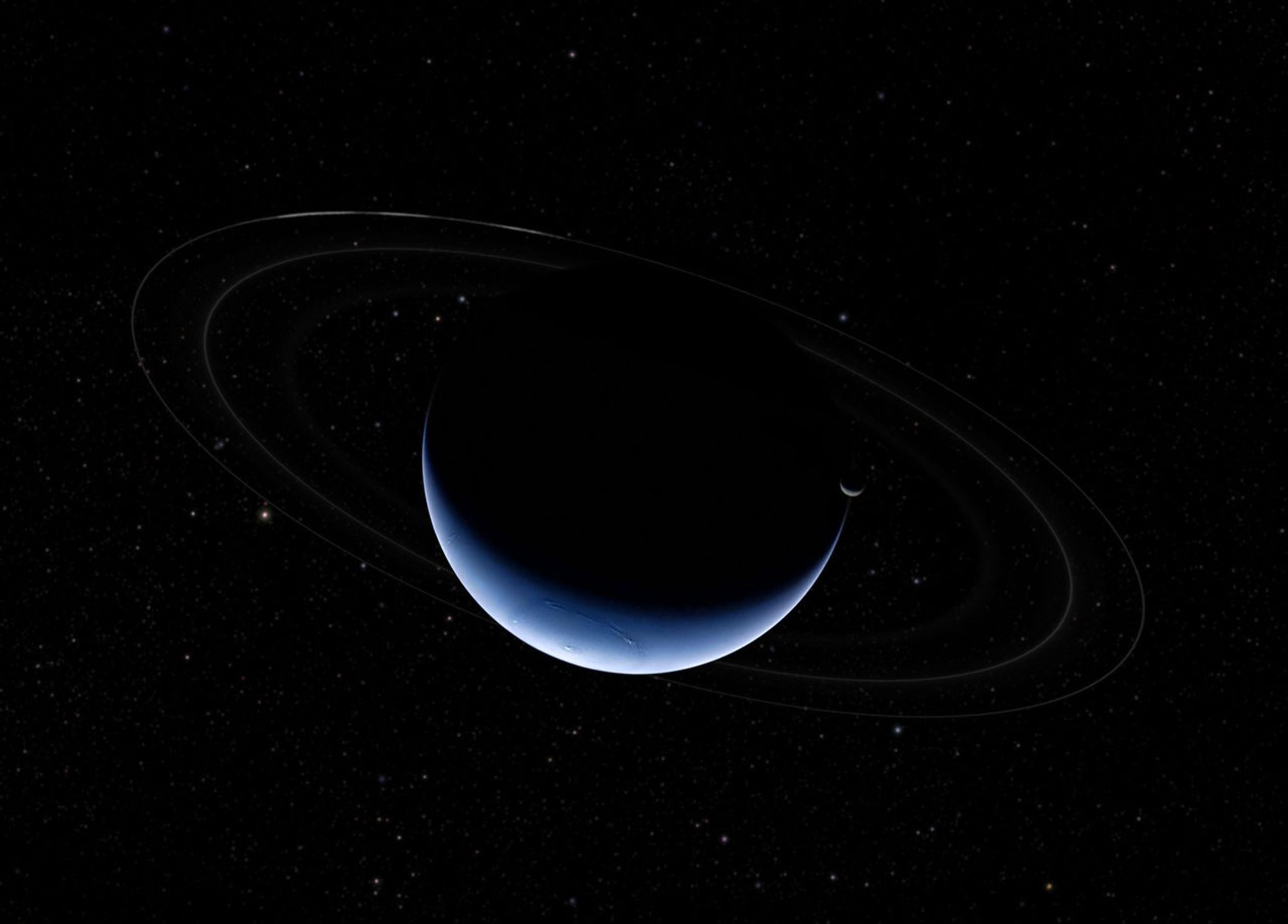
NASA’s Astronomy Picture of the Day for 21 November 2026 revisits one of the most distant planetary encounters ever achieved. The image is a carefully assembled mosaic that shows Neptune, its largest moon Triton, and the planet’s faint ring system as they appeared to Voyager 2 more than three decades ago. This article breaks down the story behind the picture in plain language.
The Historic Flyby
Voyager 2 made its closest approach to Neptune on 25 August 1989, becoming the only spacecraft to visit the solar system’s most distant ice giant. The encounter lasted only a few hours, yet it returned the first close-up images of the planet’s dynamic atmosphere and its system of rings. Because no other mission has returned to Neptune, those observations remain the definitive visual record for scientists and the public alike. The APOD draws directly on that historic dataset, which continues to be the primary reference for any future exploration of the Neptunian system.
Building the Composite Image
The picture you see is not a single photograph. It combines multiple frames taken during the flyby and the days that followed, stitching together the planet’s dim disk, Triton’s bright crescent, and the tenuous ring arcs. Image processors used the original Voyager 2 data from NASA’s Planetary Data System, adding a modeled starfield that matches the spacecraft’s outbound view toward the constellation Camelopardalis. This composited scene was assembled by Rolf Olsen using Voyager 2 imagery archived in the Planetary Data System, with the faintest ring segments reconstructed from models because they fell below the detector’s sensitivity.
Neptune’s Atmosphere Details
High-altitude cirrus clouds and a dark band encircle the planet’s south polar region, with a distinct vortex sitting above the pole itself. These features reveal active weather patterns despite Neptune’s great distance from the Sun. The thin sunlit crescents of both Neptune and Triton illustrate the low illumination at 30 AU, a condition that makes the planet appear faint even to a nearby spacecraft. From just beyond Neptune’s orbit, the perspective looks back toward the Sun, capturing both bodies as slender crescents rather than fully illuminated disks.
Rings and Ring Arcs
Voyager 2 first imaged the planet’s very faint ring system, capturing three bright arcs that stand out against the darker background. These arcs are dense concentrations of ring material first resolved during the flyby. The faintest ring segments in the composite are reconstructed from models because they were too dim to detect directly. These arcs are thought to be confined by gravitational resonances with nearby moons, a hypothesis that still guides ring dynamics research today.
Starfield Context
The background spans 7.5 degrees and is built from sky-survey data centered on Camelopardalis, matching the direction Voyager 2 was looking as it departed the Neptunian system. Including the starfield helps viewers appreciate the spacecraft’s perspective and the vast emptiness of the outer solar system. The starfield corresponds to the outbound Voyager’s view of the magnificent Neptunian system, providing context for the spacecraft’s trajectory as it continued toward interstellar space.
Voyager 2’s Current Status
As of 2026, the Voyager 2 spacecraft is traveling through interstellar space, well beyond the heliosphere. Still cruising after more than four decades since launch, it continues to return data about the interstellar medium. This remarkable longevity means the spacecraft that gave us our only close-up look at Neptune is now humanity’s most distant operational probe, sampling the environment between stars.
- Only Voyager 2 has visited Neptune up close.
- The APOD composite merges real flyby frames with modeled data.
- Neptune’s south polar vortex and ring arcs remain key scientific targets.
- Voyager 2 is now in interstellar space, still returning data.
Why This Matters
Understanding the Voyager 2 encounter helps us gauge how much we still don’t know about ice giants. The data continue to inform models of planetary formation, atmospheric dynamics, and ring physics. Because no follow-up mission is currently funded, the 1989 dataset remains the primary reference for any future exploration of Neptune and Triton. Mission concept studies such as Neptune Odyssey and Trident aim to return to the system in the 2030s, but until then, Voyager 2’s observations are all we have.
What to Do Next
If you want to dive deeper, start by exploring the original Voyager 2 image archive on NASA’s Planetary Data System. Many of the raw frames are publicly accessible and can be processed with free software. Consider following upcoming mission concept studies such as the Neptune Odyssey or Trident proposals, which aim to return to the system in the 2030s. The APOD page itself includes credits and links to the data sources used in the composite.
Want more practical guides? Explore more Ayxworks insights and save this article for later.
FAQ
When did Voyager 2 fly by Neptune?
The closest approach occurred on 25 August 1989.
Is the APOD image a single photograph?
No, it is a composite assembled from multiple Voyager 2 frames plus modeled ring segments and a starfield.
Why does Neptune appear as a thin crescent?
At the time of the flyby the Sun illuminated only a sliver of the planet from Voyager 2’s vantage point beyond Neptune’s orbit.
What are the bright arcs in Neptune’s rings?
They are dense concentrations of ring material first resolved by Voyager 2; the faintest parts are modeled because they were too dim to detect directly.
Where is Voyager 2 now?
As of 2026 the spacecraft is traveling through interstellar space, well beyond the heliosphere.
Can I access the raw Voyager 2 data myself?
Yes, the NASA Planetary Data System hosts the full dataset for public download.