On this page
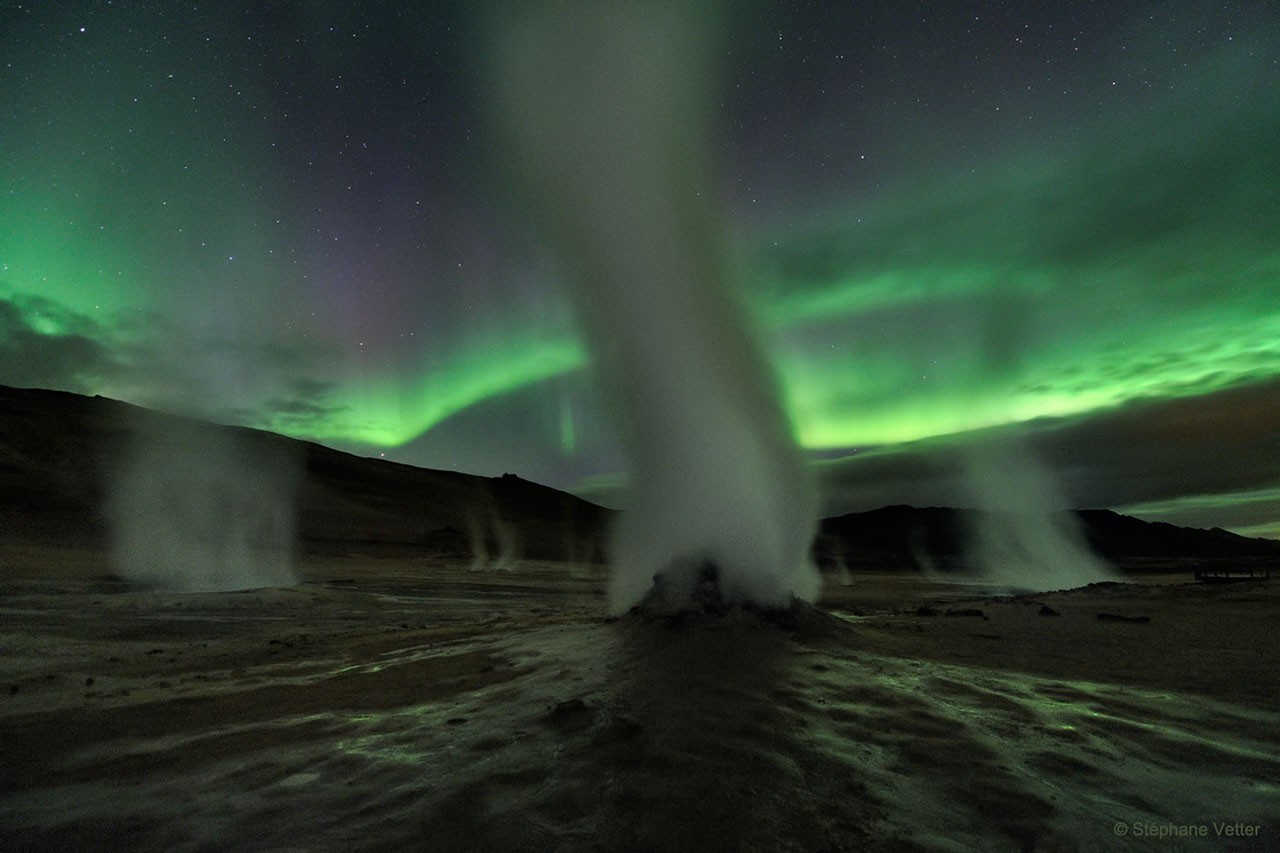
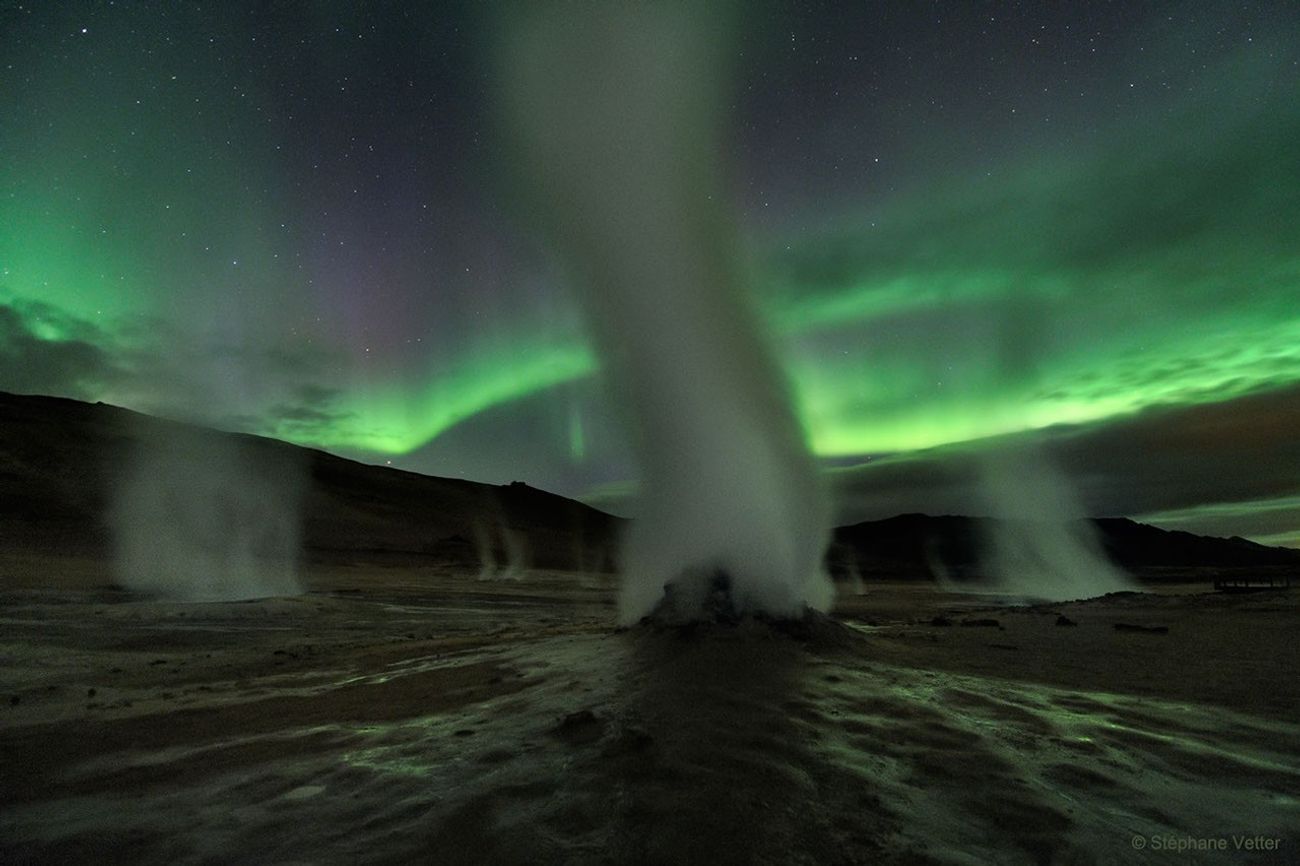
On Halloween 2026 NASA’s Astronomy Picture of the Day showed a ghostly green glow over a steaming landscape, prompting many viewers to ask which planet they were seeing. The answer is surprisingly close to home: the photograph captures Earth’s own night sky over a geothermal field in Iceland.
What the Image Shows
The picture reveals curtains of greenish light dancing above towers of steam rising from fumaroles. Those luminous curtains are the aurora borealis, created when energetic particles from the Sun collide with gases in the upper atmosphere. The steam plumes add an eerie, otherworldly texture that makes the scene look like a scene from a horror film.
NASA’s caption explains that the ghostly towers are venting gas and steam from local fumaroles, while the aurora provides the green backdrop. The combination of geothermal activity and space weather produces a rare visual pairing that is both beautiful and scientifically informative.
Where It Was Captured
Hverir lies in the volcanic region of northeastern Iceland, a place known for boiling mud pots, hissing vents, and constant steam. The site’s high latitude (around 65° N) puts it under the auroral oval, so when geomagnetic activity spikes the northern lights appear overhead with high probability.
Because the area is geothermally active, the ground constantly releases heat and gases, creating the steam columns seen in the photograph. This ground‑level activity does not cause the aurora; it simply shares the frame, giving the illusion of a single, alien world.
How the Aurora Forms
Solar eruptions send streams of charged particles toward Earth. When those particles encounter the planet’s magnetic field they are funneled toward the poles, where they strike oxygen and nitrogen atoms in the upper atmosphere. The collisions excite the atoms, which then release photons — most commonly green light from oxygen at about 100 km altitude.
The APOD explanation notes that the geomagnetic storm responsible for this display was triggered by heightened solar activity. The storm “unleashed energetic particles trapped in Earth’s magnetic field,” allowing them to penetrate the upper atmosphere at high latitudes and create the visible aurora.
Solar Cycle Context
The Sun follows an roughly 11‑year cycle of magnetic activity. In late 2026 the Sun is just past the peak of Solar Cycle 25, meaning the frequency of strong flares and coronal mass ejections remains elevated. That explains why auroral activity is still “in a high state” according to the APOD notes.
As the cycle declines, the number of intense storms will gradually drop, but the next few years still offer good chances for vivid displays at high latitudes. Observers in Iceland, Scandinavia, and Canada can expect more nights like the one captured at Hverir.
Why This Matters
Understanding how solar storms drive auroras helps scientists predict space‑weather impacts on satellites, power grids, and radio communications. The Hverir image provides a vivid, ground‑level illustration of the same processes that can disrupt technology far above the surface.
For the public, the photograph turns an abstract space‑weather concept into a tangible scene that can be shared on social media, sparking curiosity about the Sun‑Earth connection and encouraging interest in STEM fields.
What to Do Next
If you want to chase similar auroras, monitor real‑time geomagnetic indices such as the Kp index and check cloud‑cover forecasts for high‑latitude sites. Iceland’s Hverir region is accessible by road and offers a dramatic foreground for photography.
For deeper learning, explore NASA’s Space Weather Prediction Center and the APOD archive, where each day’s image comes with a concise, expert‑written explanation. Those resources turn a single photograph into a gateway for ongoing education.
- The “spooky planet” is Earth, not an alien world.
- Image taken at Hverir, Iceland, a geothermal field at high latitude.
- Aurora caused by a geomagnetic storm from heightened solar activity.
- Solar Cycle 25 peak still driving frequent auroral displays.
Note: The steam columns are unrelated to the aurora; they simply share the same line of sight.
Tip: Use a tripod and a wide‑angle lens with a fast aperture (f/2.8 or wider) to capture both the steam and the aurora in a single exposure.
Want more practical guides? Explore more Ayxworks insights and save this article for later.
FAQ
What planet appears in the APOD image for 31 October 2026?
The image shows Earth; the “spooky planet” label is a playful Halloween reference.
Where was the photograph taken?
It was captured at Hverir, a geothermally active area in northeastern Iceland.
Why does the aurora look green?
Green light comes from oxygen atoms about 100 km up releasing photons after being excited by solar particles.
Is the steam causing the aurora?
No. The steam rises from fumaroles, while the aurora is produced high in the atmosphere by space weather.
Will auroras remain strong in the next few years?
Solar Cycle 25 is just past its peak, so elevated auroral activity is expected to continue for a couple of years before declining.
How can I see an aurora like this myself?
Travel to high‑latitude locations during periods of high Kp index, watch weather forecasts, and bring a camera capable of long exposures.
External Sources and Further Reading
- NASA APOD: Night on a Spooky Planet (31 Oct 2026)
- APOD: 2026 October 30 – Haunting the Cepheus Flare
- NASA’s James Webb Space Telescope Captures Eerie Cat’s Head