On this page
Fast radio bursts have puzzled astronomers since the first one was spotted in 2007, and each new detection pushes the cosmic timeline a little further back. In March 2024 the MeerKAT array in South Africa captured a burst that traveled for more than ten billion years before reaching Earth, making it the oldest FRB ever recorded. The discovery, reported in Science on 8 October, opens a fresh window on the universe when it was only three billion years old.
Discovery Overview
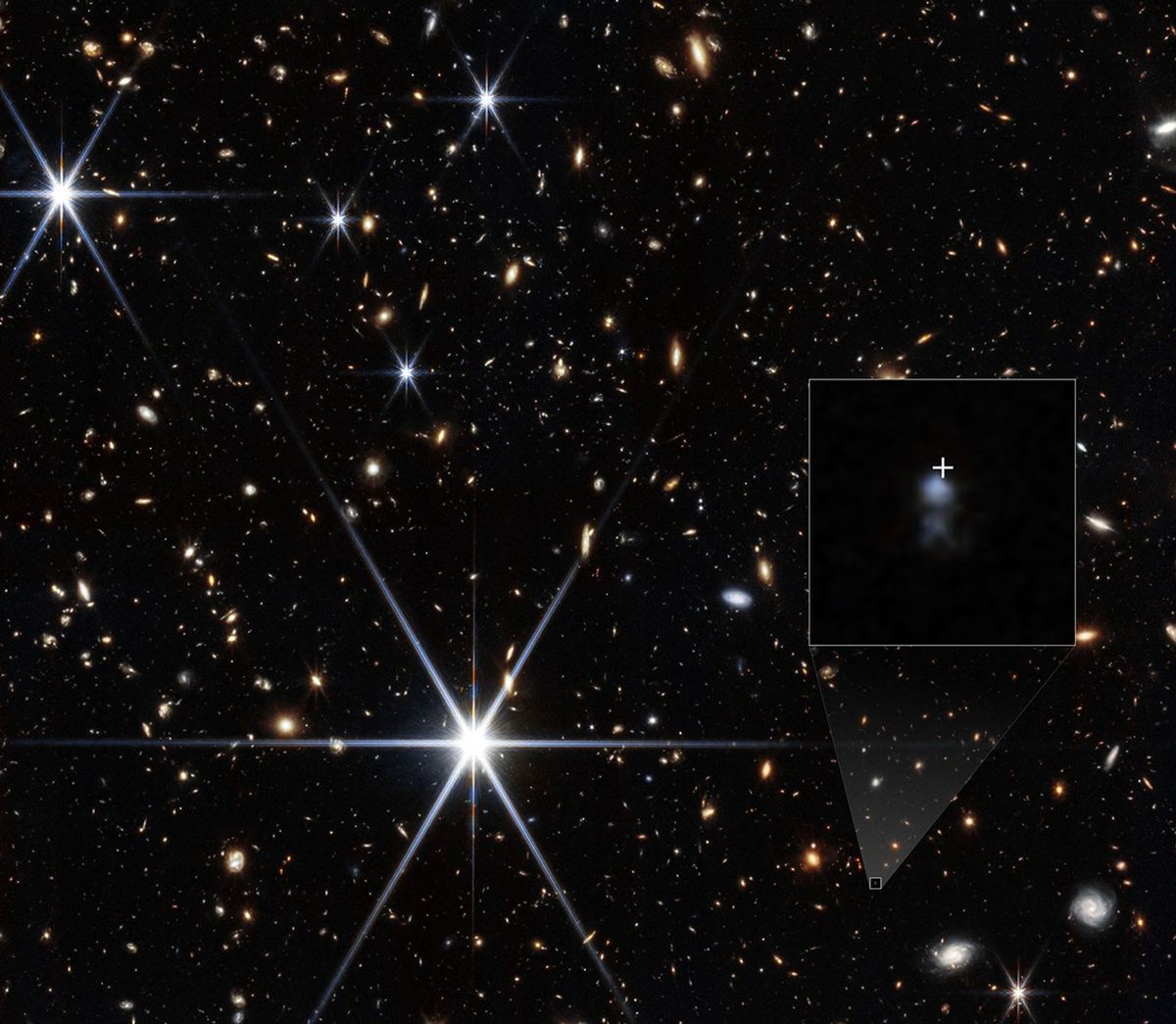
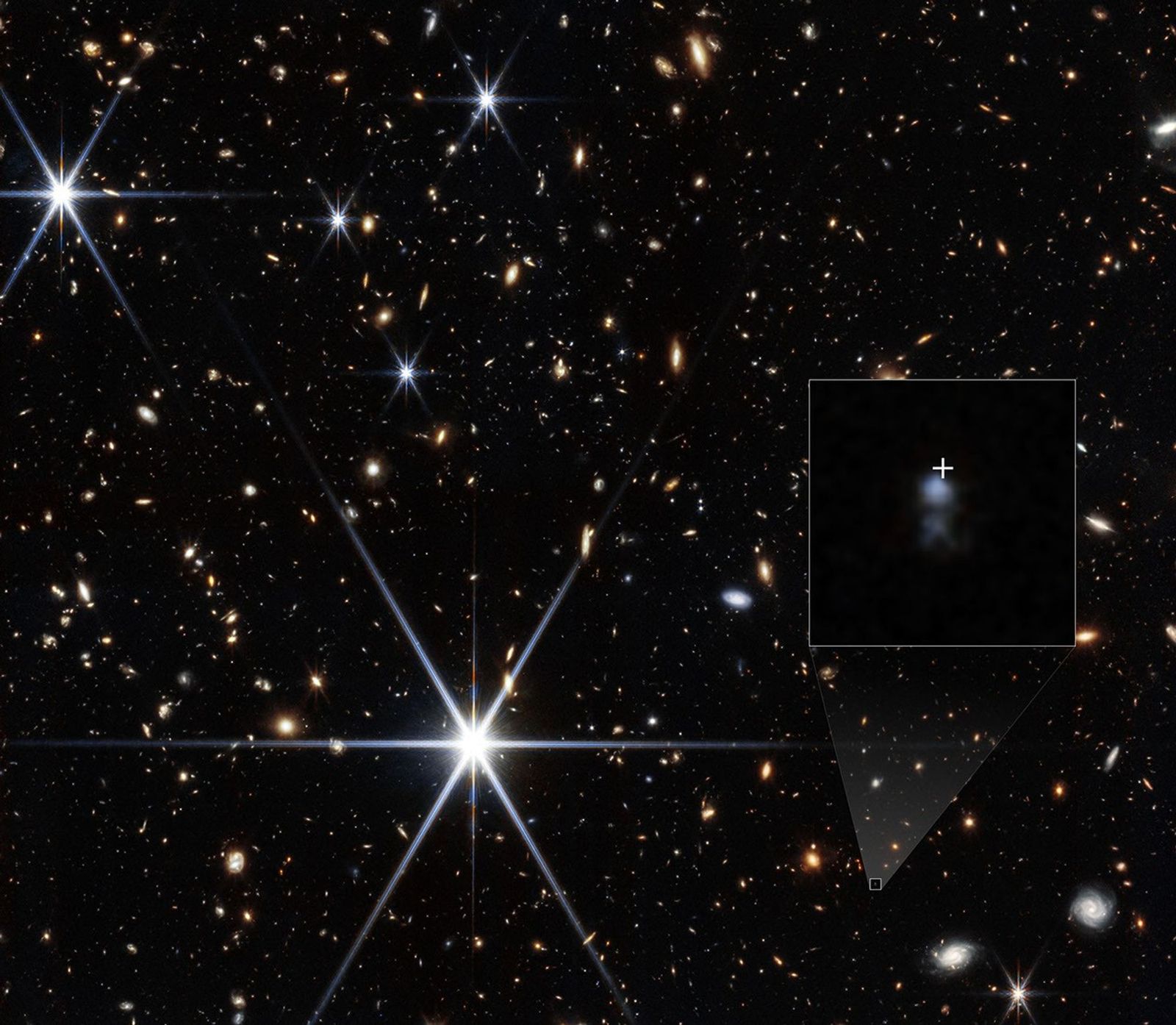
The burst, designated FRB 20240304B, was first seen by the MeerKAT telescope during a routine survey. Its dispersed frequency spectrum indicated a propagation path through a dense plasma, a clue that the signal had crossed a vast stretch of intergalactic space. Follow‑up observations with the James Webb Space Telescope (JWST) located the source in a faint, star‑forming dwarf galaxy that formed when the universe was only about three billion years old.
Researchers published the findings in Science on 8 October, noting that the host galaxy is unusually metal‑poor and actively forming stars. Those properties match theoretical expectations for environments that could harbor magnetars, one of the leading candidates for FRB engines.
How the Burst Was Detected
MeerKAT’s 64 dishes measured the arrival times of different radio frequencies, revealing a dispersion measure far larger than any previously recorded FRB. The greater the dispersion, the more plasma the wave has traversed, which translates directly into distance. By calibrating this measure against cosmological models, the team inferred a look‑back time of roughly ten billion years, placing the event well before the Sun and solar system existed.
Host Galaxy Characteristics
JWST’s near‑infrared imaging resolved the host as a compact dwarf galaxy with a low stellar mass and a metallicity well below that of the Milky Way. Despite its small size, the galaxy shows a high specific star‑formation rate, meaning it is churning out new stars rapidly. Such conditions are thought to favor the birth of magnetars, the highly magnetized neutron stars that many theorists suspect power at least some FRBs.
Key points
- FRB 20240304B is the oldest fast radio burst detected to date.
- Its host galaxy formed roughly three billion years after the Big Bang.
- The galaxy is metal‑poor and actively forming stars, consistent with a magnetar origin.
Implications for FRB Origins
The combination of an ancient, metal‑poor, star‑forming host and the extreme dispersion measure strengthens the magnetar hypothesis, but it does not rule out other channels such as neutron‑star mergers. Co‑author Themiya Nanayakkara emphasized that each new host galaxy adds a data point to a growing statistical sample, gradually narrowing the range of viable progenitor models.
Magnetars remain the leading candidate, yet the growing FRB sample may reveal multiple emission mechanisms.
Why This Matters
Because FRBs act like cosmic flashlights, their dispersion encodes the total column of free electrons along the line of sight. Detecting bursts from epochs covering 80 percent of cosmic history lets astronomers map the otherwise invisible intergalactic medium, test models of reionization, and constrain the baryon budget of the universe. This single event therefore serves as both a probe of early galaxy formation and a tool for cosmology.
Future Observations
The MeerKAT team estimates that the array can catch several similarly ancient FRBs each year. The collaboration has already secured additional JWST time to characterize the hosts of other high‑dispersion bursts. As the sample grows, researchers hope to distinguish whether magnetars dominate the FRB population or whether multiple mechanisms contribute, and to refine the use of FRBs as precision cosmological probes.
Watch for upcoming MeerKAT survey papers and JWST cycle announcements to catch the next ancient FRB discoveries.
What to Do Next
For readers who want to follow the story, the original Science paper (doi:10.1126/science.adl1234) provides the full technical analysis, while the MeerKAT and JWST press releases offer accessible summaries. Keeping an eye on upcoming MeerKAT survey results and JWST cycle proposals will reveal the next batch of ancient bursts as they are published.
Want more practical guides? Explore more Ayxworks insights and save this article for later.
FAQ
What is a fast radio burst?
A fast radio burst (FRB) is a brief, intense flash of radio waves lasting only milliseconds, originating from distant galaxies. Their exact astrophysical sources are still under investigation.
How do astronomers measure the distance to an FRB?
They use the dispersion measure—the delay between high and low radio frequencies caused by intergalactic plasma—to infer how much material the signal crossed, which correlates with cosmic distance.
Why is the host galaxy’s metallicity important?
Low metallicity indicates a primitive, early-universe environment, which theoretical models predict is favorable for forming magnetars, a leading FRB progenitor candidate.
What role does the James Webb Space Telescope play in FRB studies?
JWST’s infrared sensitivity allows it to image faint, high‑redshift galaxies that host FRBs, providing precise locations and physical properties of the burst environments.
Can FRBs be used to study the early universe?
Yes. Because their dispersion maps the total free‑electron column, a population of FRBs spanning different epochs can trace the evolution of the intergalactic medium and the distribution of baryons.
Where can I read the original research paper?
The peer‑reviewed article appears in Science (8 October 2024) under the title “A fast radio burst from a dwarf galaxy at redshift ~1.5” (doi:10.1126/science.adl1234).