On this page
Faraday Future, long known for its electric‑vehicle ambitions, is now positioning robotics as a pillar of its future. In a wide‑ranging interview with Robotics & Automation News, global executive chairman Jerry Wang outlines a “Built in USA” roadmap that aims to have a domestic robot factory running by the end of 2026 and the first US‑assembled robot shipping in February 2027.


Overview of Faraday Future’s Robotics Pivot
Wang describes the company as a “physical AI ecosystem company,” emphasizing that intelligent vehicles and embodied AI robots share core technologies such as perception, sensor fusion, computing, connectivity, and data intelligence. This strategic framing means robotics is not a side project but a complementary growth engine alongside the FF and FX vehicle programs.
The interview reveals that the company currently relies heavily on Chinese OEMs for robot hardware. The new roadmap seeks to replace that dependence with a domestic supply chain that includes component suppliers, software developers, system integrators, and service infrastructure.
FCC Rules and Compliance Strategy
Recent FCC actions targeting Chinese‑made connected devices have heightened regulatory pressure. Wang confirms that Faraday Future already holds FCC certification for all products sold in the US and has participated in the public‑comment process. The company has also hired advisors focused on FCC, ICTS, and NDAA compliance to ensure future embodied‑AI robots meet domestic standards.
These moves reinforce the localization strategy: by building US‑based R&D, certification support, and manufacturing, Faraday Future aims to reduce regulatory risk and accelerate market entry for new robot models.
“Built in USA” Timeline and Assembly Plans
At the Los Angeles “Built in USA” conference, the company announced a target to bring a robot factory online by the end of 2026, with the first US‑assembled robot slated for February 2027. Wang stops short of publishing a precise domestic‑content percentage, stating the goal is a progressive increase in US‑sourced components while retaining flexibility to work with global partners.
The roadmap envisions three to five new or next‑generation robotics products launched each year, each iteration expanding the domestic supplier base and manufacturing depth.
Cost vs. Strategic Value of US Manufacturing
Wang acknowledges that US production will likely carry higher unit costs than Chinese sourcing. However, he argues the total value equation includes supply‑chain security, regulatory certainty, faster customer response, improved quality control, and reduced geopolitical and logistics risks.
These advantages are framed as increasingly critical for enterprise customers who prioritize reliability, serviceability, and operational flexibility over the lowest upfront price.
Reusing EV Infrastructure at Hanford
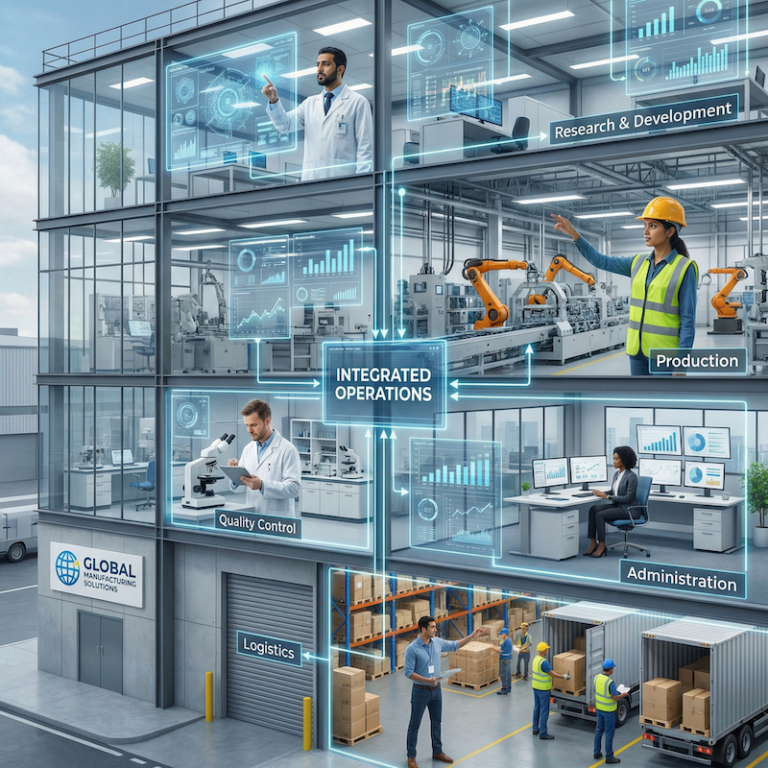
Faraday Future is evaluating two paths: retrofitting its Hanford, California EV plant or building a dedicated robotics facility. Wang highlights that many core capabilities — industrial assembly, quality‑control systems, supply‑chain management, testing processes, manufacturing engineering, logistics, and production management — are already mature from EV production and can be transferred to robot manufacturing.
While the exact reuse ratio remains undisclosed, the company believes the overlap provides a meaningful head start compared with a greenfield robotics startup.
Shared Technology Between EVs and Robots
Both product lines draw on a common AI platform encompassing perception, sensor fusion, computing, connectivity, software integration, and data intelligence. Wang stresses that this shared stack creates engineering, manufacturing, and data synergies, allowing advances in vehicle autonomy to accelerate robot capabilities and vice versa.
From a manufacturing perspective, overlapping supply‑chain management, electronics integration, and testing procedures further blur the line between the two businesses, supporting the vision of a unified physical AI ecosystem.
Key Takeaways
- US robot factory targeted for late 2026; first US‑assembled unit early 2027.
- FCC compliance and NDAA advisory hires underscore regulatory seriousness.
- Cost premium offset by supply‑chain resilience, quality, and faster service.
- Hanford EV plant offers reusable assembly, QA, and logistics infrastructure.
- Shared AI, perception, and data platforms unite vehicle and robot development.
Why This Matters
The shift signals a broader industry trend: US policymakers are tightening rules on Chinese‑made connected hardware, pushing companies to localize production. Faraday Future’s approach — leveraging existing EV assets while building a domestic robotics ecosystem — could serve as a template for other mobility firms entering embodied AI.
For enterprise buyers, the promise of US‑based support, quicker firmware updates, and reduced geopolitical exposure may justify higher acquisition costs, especially in sectors like logistics, security, and manufacturing where uptime is critical.
What to Do Next
If you are evaluating robotics vendors, ask for a clear domestic‑content roadmap and FCC/NDAA compliance documentation. Track Faraday Future’s product launches over the next 12‑18 months to gauge whether the “Built in USA” milestones translate into shipping volume and service network growth.
Developers and integrators should monitor the shared AI platform announcements; early access to common perception and data tools could accelerate custom robot deployments.
Want more practical guides? Explore more Ayxworks insights and save this article for later.
FAQ
When will Faraday Future’s US robot factory be operational?
The company targets a factory launch by the end of 2026, with the first US‑assembled robot scheduled for February 2027.
What FCC actions are driving the localization push?
New FCC rules targeting Chinese‑made connected devices have created incentives for US‑based certification and supply‑chain control, prompting Faraday Future to hire compliance advisors and participate in the public‑comment process.
Will US‑made robots be more expensive than Chinese‑sourced ones?
Wang acknowledges higher manufacturing costs but argues that supply‑chain security, regulatory certainty, faster support, and quality improvements offset the price premium for enterprise customers.
How much of the Hanford EV plant can be reused for robot production?
While no exact percentage is disclosed, Faraday Future says core capabilities — assembly lines, QA systems, logistics, and manufacturing engineering — are directly transferable, giving a significant head start.
What technologies are shared between FF’s EVs and its robots?
Both rely on a common AI platform covering perception, sensor fusion, computing, connectivity, software integration, and data intelligence, plus overlapping manufacturing processes such as electronics integration and testing.
How many new robot products does Faraday Future plan each year?
The roadmap calls for three to five new or next‑generation robotics products launched annually in the US market.
External Sources and Further Reading
- Interview with Faraday Future chairman (Robotics & Automation News)
- Foreign gadget bans: FCC clampdown on Chinese tech (The Verge)
- Maxinsights raises the current retailer priceM for physical AI training data (Robotics & Automation News)