On this page
The regular iPhone used to involve an obvious compromise: you could save money, but you had to accept a 60Hz display and a less versatile camera system. The iPhone 17 changes that equation. With a 6.3-inch 120Hz OLED screen, 256GB of standard storage, an A19 chip, a new 48MP ultra-wide camera and an 18MP Center Stage selfie camera, Apple’s mainstream phone became a much more complete package. But is it still a smart purchase in late 2026, and are its battery and camera improvements as dramatic as they sound?
Editorial methodology — updated October 9, 2026: This is an independent, research-based AYXWORKS buying guide, not a hands-on test conducted by our team. Apple specifications are identified as manufacturer claims; battery figures, camera assessments and performance results are attributed to the publications that measured them. Prices, software availability and cellular features can differ by country.
The iPhone 17 Verdict at a Glance
For many buyers, the iPhone 17 is the point where Apple’s base model finally stopped feeling like the deliberately restricted option. Its display now offers the fluidity and Always-On functionality previously associated with more expensive iPhones. Meanwhile, the improved ultra-wide and front cameras fix two meaningful weaknesses of earlier standard models.
There are compromises. The regular iPhone 17 still has only two rear camera modules, its 2× setting is a crop from the main sensor rather than a separate long telephoto lens, and its USB-C port is restricted to USB 2 transfer speeds. Battery endurance is solid, but the marketing promise of up to 30 hours of video playback should not be confused with a full-day mixed-use benchmark.
Best for: iPhone 12, 13, 14 and standard iPhone 15 owners seeking a noticeably better display, camera versatility, charging and long-term usability.
Think twice if: You already own an iPhone 16 Pro or 17 Pro; you need optical-quality zoom beyond 2×, heavy professional video workflows or the longest possible battery life; or the latest models are within a small price difference.
What we like
- 6.3-inch adaptive 120Hz OLED display with Always-On functionality.
- 256GB base storage, a particularly practical upgrade for long-term owners.
- Fast A19 performance and strong general software responsiveness.
- 48MP main and ultra-wide cameras, plus a useful 18MP Center Stage front camera.
- Improved wired charging and up to 25W MagSafe or compatible Qi2 wireless charging.
- Comfortable 177g body, Face ID, Wi-Fi 7 and a mature iPhone ecosystem.
What holds it back
- Battery results are not consistently much better than the iPhone 16.
- No separate 3× or 5× telephoto camera for distant subjects.
- USB-C file transfer remains limited to USB 2, up to 480Mb/s.
- Premium pricing, especially outside the US and without a discount.
- Not a compelling upgrade from a healthy recent Pro iPhone.
iPhone 17 Specifications: What You Actually Get
These are the standard iPhone 17 specifications, not those of the iPhone 17 Pro, Pro Max, Air or 17e. Regional SIM configurations differ, so check the exact model sold in your country.
| Display | 6.3-inch Super Retina XDR OLED, 2622 × 1206, 460ppi |
|---|---|
| Refresh rate | Adaptive ProMotion up to 120Hz; Always-On display |
| Brightness (Apple claim) | 1,000 nits typical; 1,600 HDR peak; 3,000 outdoor peak |
| Processor | A19, 6-core CPU, 5-core GPU, 16-core Neural Engine |
| Storage | 256GB or 512GB |
| Main camera | 48MP Fusion, 26mm equivalent, f/1.6, sensor-shift OIS |
| Ultra-wide camera | 48MP Fusion, 13mm equivalent, f/2.2, 120° field of view |
| Zoom | 12MP optical-quality 2× crop from main camera; no dedicated telephoto module |
| Front camera | 18MP Center Stage with autofocus |
| Video | Up to 4K Dolby Vision at 60fps; Dual Capture up to 4K/30fps |
| Apple-rated playback | Up to 30 hours local video; 27 hours streamed video |
| Charging | USB-C fast charging; MagSafe and Qi2 wireless up to 25W |
| USB data | USB 2, up to 480Mb/s; DisplayPort video output supported |
| Wireless | 5G, Wi-Fi 7, Bluetooth 6, NFC, UWB, Thread |
| Dimensions / weight | 149.6 × 71.5 × 7.95mm; 177g |
| Protection | Ceramic Shield 2 front; IP68 rating |
| Operating system | Launched with iOS 26; software and AI features vary with updates and region |
Specification source: Apple’s official iPhone 17 technical specifications. Peak brightness and playback duration are laboratory or manufacturer conditions, not guaranteed everyday results.

Design and Build: Familiar, but Better Balanced
Apple hasn’t reinvented its mainstream phone. The iPhone 17 keeps the recognizable flat-sided silhouette, dual rear cameras and compact form factor. At 177g, it is manageable for extended reading, messaging, photography and one-handed use. Its 6.3-inch screen gives slightly more viewing area than the iPhone 16’s 6.1-inch display without turning the phone into a bulky Pro Max alternative.
Aluminum and glass construction, the Action button, Camera Control and Face ID make it feel like a modern premium phone. Ceramic Shield 2 improves the front-glass proposition, while the IP68 rating is useful protection against accidental exposure to water and dust. IP ratings are controlled laboratory tests, however, and water resistance can decline with wear. Do not treat the phone as waterproof or assume liquid damage is automatically covered by warranty.
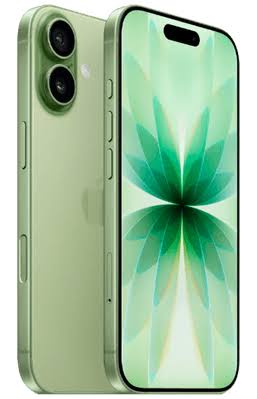
Available colors include Black, White, Mist Blue, Sage and Lavender. Choose a finish in person if possible: photos often exaggerate or flatten subtle shades.
Display: The Upgrade You’ll Notice Every Day
The 120Hz ProMotion panel is the headline improvement. Earlier standard iPhones were restricted to 60Hz, even when less expensive Android phones offered smoother refresh rates. On the iPhone 17, fast scrolling, app transitions and supported games look more fluid. The adaptive system can lower the refresh rate when high frame rates are unnecessary, and the Always-On display lets you glance at useful information without fully waking the phone.
The OLED panel offers deep blacks and high contrast. Apple specifies 1,600-nit peak HDR brightness and up to 3,000 nits outdoors, plus an anti-reflective coating. Those numbers describe different test conditions: you should not expect the entire screen to sustain 3,000 nits while watching a movie or reading outside. GSMArena’s brightness measurements were much lower than the marketing peak under its repeatable settings, while still finding the new display a significant overall upgrade.
For people reading maps, emails and long articles on the move, the combination of higher refresh rate, strong contrast and reduced reflections may matter more than an incremental CPU benchmark. If you are upgrading from an iPhone 16, this is likely the first change you will notice.
A19 Performance: Fast Enough for Years?
The iPhone 17 uses Apple’s A19 chip with a six-core CPU and five-core GPU. Everyday tasks such as photography, navigation, browsing, messaging and editing short videos should be comfortably within its capabilities. Hardware-accelerated ray tracing and the updated GPU also support more demanding mobile games.
Independent benchmarks support a genuine generational improvement. In a GSMArena comparison, the iPhone 17 recorded a Geekbench 6 multi-core score of around 9,360, against approximately 7,929 for the iPhone 16. These are results from that publication’s test environment, not benchmarks conducted by AYXWORKS, and scores may change with software and thermal conditions.
There is a point of diminishing returns. If you already have an iPhone 16 or 16 Pro that opens apps instantly, the speed difference alone probably won’t justify a new purchase. The stronger reasons to upgrade are the display, cameras, storage capacity and charging. The A19 is valuable primarily because it provides headroom for future software, heavier apps and continued use.
What about Apple Intelligence?
The iPhone 17 supports Apple Intelligence features, but the quality and availability of those features depend on the installed iOS release, selected language, country and service rollout. In 2026, software capabilities have evolved beyond the phone’s original launch version. Evaluate the tools you can actually use today instead of treating advertised future AI features as a reason to pay more.
Battery Life: Strong, but the Numbers Need Context
The original version of this review characterized battery life as one of the iPhone 17’s largest gains. More detailed independent testing tells a different story: the iPhone 17 lasts well for its size, but it does not consistently outperform the iPhone 16 by a meaningful margin.
| Test | iPhone 17 | iPhone 16 |
|---|---|---|
| Tom’s Guide continuous 5G web browsing at 150 nits | 12h 47m | 12h 43m |
| GSMArena Active Use Score | 14h 59m | 15h 42m |
| Apple stated local video playback maximum | Up to 30h | Up to 22h |
Sources: Tom’s Guide battery testing, GSMArena comparison and Apple product specifications. These methodologies measure different workloads and cannot be directly compared with each other.
Why the disagreement? Battery life changes with screen brightness, radio conditions, refresh rate, app behavior and workload. The adaptive 120Hz display feels better in use but can consume more energy in certain browsing scenarios. Apple’s longer video-playback claim reflects a different, more controlled test. Neither lab result guarantees how your device will behave on a travel day with navigation, photography, messaging and cellular data.
Buying advice: Expect competent everyday battery life rather than a dramatic multi-day endurance breakthrough. Heavy gamers, frequent travelers and people who spend all day on mobile data should compare larger or newer models and consider whether a compact power bank is a more economical solution.
Charging: A More Useful Improvement Than Battery Capacity
Charging is a more convincing reason to appreciate the hardware upgrade. Apple specifies up to 50% battery charge in about 20 minutes using a compatible 40W-or-higher USB-C power adapter and cable. With a compatible MagSafe charger and sufficient power adapter, Apple claims up to 50% in approximately 30 minutes. The accessories are sold separately, and charging slows as the battery approaches full capacity.
GSMArena measured about 36% after 15 minutes, 63% after 30 minutes and a full charge in approximately 85 minutes in its wired test. It observed power around 29W with tested chargers, so do not mistake Apple’s recommended adapter wattage for a claim that the phone continuously draws 40W. Charger compatibility, temperature and battery health all affect results.
For most buyers, a reputable USB-C Power Delivery charger with adequate headroom is a better investment than a proprietary accessory. If you already own a compatible charger, check its USB PD support before buying another.
iPhone 17 Camera Review: What’s Actually New?
Apple now uses a 48MP main camera and a 48MP ultra-wide camera on the standard iPhone 17. The front camera moves to an 18MP Center Stage system with autofocus. These upgrades increase flexibility, although the highest megapixel count does not automatically mean the best photograph in every condition.
Main camera: Dependable for everyday photography
The 48MP Fusion main camera combines a 26mm-equivalent field of view, f/1.6 aperture and sensor-shift optical image stabilization. It offers 24MP and 48MP photo options. The main camera is the phone’s strongest everyday imaging tool for people, street photography, food, pets and travel.
Computational processing, exposure choice and motion remain important. In bright scenes, abundant light helps resolve fine detail. In difficult indoor or nighttime conditions, any phone camera can lose texture, blur movement or apply noticeable noise reduction. The iPhone 17 is a capable point-and-shoot device, but it is not exempt from physics.
48MP ultra-wide: A meaningful practical upgrade
The new 48MP ultra-wide camera uses a 13mm-equivalent lens with a 120-degree field of view. It is useful for architecture, group shots, small rooms and landscapes where stepping backward is impossible. It also supports close-up macro photography. Compared with older lower-resolution ultra-wide systems, the upgraded sensor offers more room for detail when lighting is favorable.
Use the main camera when image quality matters most in very low light. Ultra-wide cameras generally face a tougher challenge because of their lens and sensor design, and edge detail may look weaker than the center of the image.
2× zoom is useful, but not a telephoto lens
Apple lists a 12MP optical-quality 2× zoom mode on the iPhone 17. This uses the center portion of the 48MP main sensor to approximate a 52mm-equivalent view. It does not mean the phone contains a third, dedicated optical telephoto camera. Portraits and moderately close subjects can look good at 2×, but distant concerts, wildlife and sports are much stronger reasons to compare Pro-class camera hardware.
That limitation appears in independent evaluations. DXOMARK awarded the iPhone 17 camera system a score of 157 in its August 2026 assessment and reported a well-rounded overall performance, with zoom among the areas buyers should examine carefully. A numerical camera ranking is useful context, not a substitute for comparing photographs of the subjects you actually shoot.
18MP Center Stage selfies: A sleeper upgrade
The front camera is more than a simple megapixel bump. Center Stage can adjust framing for selfies and video calls, and the expanded capture area gives users more flexibility when taking a group photo. Autofocus and upgraded stabilization make it useful for creators filming themselves, families recording short clips and frequent video callers.
If you take more selfies and video calls than zoomed-in photos, this improvement might matter more than a dedicated telephoto lens would.

Video Recording: A Strong Everyday Tool
Video remains one of the iPhone’s principal strengths. The iPhone 17 supports 4K Dolby Vision recording at up to 60fps, Cinematic mode, optical stabilization on the main camera and Action mode for supported high-motion shots. Dual Capture can record front and rear perspectives together at up to 4K Dolby Vision 30fps.
That is enough for travel diaries, social clips, family events and most small-business content. However, a creator who regularly transfers large original video files to a computer needs to factor in a surprising limitation: USB-C data transfers are capped at USB 2 speeds of up to 480Mb/s. The connector looks modern, but bulk wired transfers can be much slower than on Pro models with faster USB data support. Cloud transfer, AirDrop and editing workflows may matter as much as camera resolution.
For professional color workflows, extensive zoom coverage, specialist codecs or sustained long-form recording, compare the technical requirements with an iPhone Pro or a dedicated camera before purchasing.
Software, Connectivity, Security and Everyday Use
Google services, Microsoft apps, banking apps and the broader iOS ecosystem work within Apple’s familiar interface. Face ID, wallet features, privacy permissions, Focus modes and the Action button provide practical benefits that don’t show up in benchmark charts. The Camera Control button can be useful, but its value depends on whether you prefer hardware controls or the familiar on-screen shutter.
Connectivity includes 5G, Wi-Fi 7, Bluetooth 6, Thread, NFC and a second-generation Ultra Wideband chip. The EU-specification model supports a physical nano-SIM and eSIM, while Apple’s US model information lists eSIM-only operation. Travelers and international buyers should verify the exact variant and carrier support before ordering.
Apple does not promise an exact fixed number of future iOS versions in this product specification. Its historical support record is encouraging, but future release eligibility and availability of specific AI features should not be treated as guaranteed.
iPhone 17 vs iPhone 16, iPhone 17 Pro and Newer Models
| Model | Why choose it? | Main compromise |
|---|---|---|
| iPhone 16 | A good discounted iPhone for buyers who don’t mind 60Hz | Older display, lower base storage, weaker ultra-wide and selfie hardware |
| iPhone 17 | Balanced everyday choice: 120Hz, 256GB, A19, dual 48MP cameras | No dedicated long telephoto and USB 2 transfers |
| iPhone 16 Pro (refurbished) | 120Hz, dedicated telephoto and more advanced creation features | Used battery health, warranty and condition require scrutiny |
| iPhone 17 Pro | More camera reach and advanced creator-oriented hardware | Higher price and weight |
| iPhone 18 Pro (2026) | Newer premium hardware and camera capabilities | Significantly higher price; not necessary for most users |
Upgrading from iPhone 13, 14 or standard iPhone 15
For these buyers, the combination of a larger 120Hz display, faster chip, upgraded cameras, USB-C on older Lightning-equipped models and improved charging can be substantial. Start by checking the health and storage of your current device. If the battery is degraded, replacing it may still be more cost-effective than buying a new phone.
Upgrading from the standard iPhone 16
The iPhone 17 is a more complete phone, especially for display-sensitive users. But independent tests don’t show a decisive battery-life leap. Upgrade if the 60Hz display frustrates you, the camera improvements matter or the storage jump solves a real problem; otherwise, a healthy iPhone 16 remains a strong device.
Switching from iPhone 16 Pro
Be careful. Your Pro already has a 120Hz display and more flexible telephoto hardware. A standard iPhone 17 could improve some everyday areas but take away specialist capabilities you currently use. It is generally not a compelling paid upgrade unless you have a specific problem with your current phone.
Buying after the iPhone 18 Pro launch
In October 2026, the iPhone 17 should be evaluated as a previous-generation mainstream model alongside newer premium devices and refurbished alternatives. Newer does not automatically mean better value. Compare the actual final price and expected features you will use, rather than paying a flagship premium for benchmark gains you won’t notice.
Price and Storage: How to Decide What It’s Worth
The iPhone 17 launched at $799 in the United States and €959 in Spain for 256GB, according to its original 2025 launch information. Prices can change substantially over time; by October 2026 the Spanish Apple online store displayed a different figure, so treat original launch pricing as historical rather than a live quote.
When shopping, compare the iPhone 17 against a refurbished 16 Pro, discounted 17 Pro and newer models at the same actual storage capacity. A cheaper headline price can disappear once you add a higher storage tier, a charger or a carrier contract with expensive long-term commitments.
256GB is the sensible default for most users, including anyone who takes lots of photos, downloads offline media or keeps a phone for several years. Buy 512GB if you regularly record substantial 4K footage, retain large media libraries locally or are frequently short of storage. Paying extra for unused storage is rarely worthwhile.
Simple value rule: If an iPhone 17 is meaningfully cheaper than a comparable Pro option and you don’t need telephoto photography or fast wired data transfer, choose the iPhone 17. If the prices are close, compare camera requirements, battery health, warranty, weight and how long you intend to keep the phone.
Five Checks Before You Buy
- Start with your current phone. Check battery health, storage pressure and whether you genuinely need new hardware. A battery replacement might solve the problem for much less money.
- Try 120Hz in person. Scroll through a long page and switch between apps. Some people see an immediate improvement; others care very little.
- Test your camera priorities. Compare main, ultra-wide, 2× portraits and distant subjects. Don’t buy a regular iPhone if your main reason to upgrade is long-range optical zoom.
- Check regional compatibility. Verify nano-SIM/eSIM support, warranty conditions, storage and included accessories—especially when buying from another country.
- Use total cost, not monthly marketing. Include carrier commitments, trade-in conditions, a case, charging accessories and the true out-of-pocket price.
Final Verdict: Should You Buy the iPhone 17 in 2026?
The regular iPhone 17 is one of the most meaningful upgrades to Apple’s mainstream iPhone formula in years. The display finally feels Pro-grade, the base 256GB configuration is far more practical, the A19 is powerful, and the upgraded ultra-wide and Center Stage cameras give everyday users more flexibility.
Its shortcomings are just as clear once the marketing is stripped away. Battery life is strong but not a consistently dramatic advance over the iPhone 16. The 2× camera option cannot replace a long optical telephoto lens. The USB-C port uses USB 2 for file transfer. And in late 2026, discounted, refurbished and newer options complicate the value calculation.
AYXWORKS recommendation: Buy the iPhone 17 if you are coming from an iPhone 15 or earlier and can get a fair price. From an iPhone 16, prioritize the screen and camera improvements rather than expecting a huge battery leap. From a recent Pro, keep what you have unless there is a compelling specific reason to change. This is a buying assessment, not a scored hands-on review.
Frequently Asked Questions
Does the iPhone 17 have a 120Hz screen?
Yes. The standard iPhone 17 has a 6.3-inch OLED display with adaptive ProMotion refresh rates up to 120Hz and Always-On functionality. This is one of its biggest upgrades over the standard iPhone 16.
Is the iPhone 17 battery significantly better than the iPhone 16?
Not consistently in independent tests. Tom’s Guide measured only four extra minutes in its 5G browsing test, and GSMArena recorded a slightly lower overall Active Use Score for the iPhone 17. Actual endurance depends on the workload and settings.
Does the iPhone 17 have a 48MP camera?
Yes. It has a 48MP main camera and a 48MP ultra-wide camera. The front-facing Center Stage camera is 18MP. Its 2× zoom is a crop from the main sensor rather than a separate long telephoto camera.
How fast can the iPhone 17 charge?
Apple specifies up to 50% in about 20 minutes with an appropriate 40W-or-higher USB-C adapter. GSMArena measured roughly 63% after 30 minutes and 85 minutes to a full wired charge in its own testing. Results vary by charger and conditions.
Does the iPhone 17 support fast USB-C data transfer?
No. Its USB-C port supports USB 2 data speeds up to 480Mb/s, although it can output video via DisplayPort. Frequent large wired transfers are a reason to compare Pro models.
Is 256GB enough on the iPhone 17?
For most buyers, yes. The standard 256GB capacity provides room for photos, apps and offline media. Choose 512GB if you regularly shoot and retain large 4K video libraries or already exceed 256GB on your current phone.
Should iPhone 16 Pro owners switch to the standard iPhone 17?
Usually not. The 16 Pro already has a 120Hz display and more advanced camera features, including a dedicated telephoto lens. Unless you have a specific reason to change, keeping a healthy 16 Pro is normally the more economical choice.
Is the iPhone 17 still worth buying in late 2026?
Yes, if the price is competitive. Its display, cameras, performance and base storage remain excellent for everyday use. Compare its current price with discounted Pro models, refurbished devices and newer iPhones before committing.
Key Takeaways
- 120Hz ProMotion is the iPhone 17’s most noticeable upgrade from a standard iPhone 16.
- Battery endurance is respectable, but independent reviews don’t support a universal major improvement.
- Both rear cameras are 48MP; 2× zoom does not equal a dedicated telephoto lens.
- Charging improves, but USB-C data transfers remain USB 2.
- 256GB base storage makes the phone easier to recommend for long-term ownership.
- The right purchase depends on your existing phone, camera needs and actual 2026 price.
Before spending your money: Compare the iPhone 17’s current unlocked price, local warranty and trade-in terms with a similarly priced refurbished iPhone Pro. Read the official Apple specifications and check current pricing in Spain. For more evidence-led technology buying guides, visit AYXWORKS Reviews.
Sources and Research Methodology
Manufacturer claims and independent test measurements are deliberately separated. This article does not use unverified owner anecdotes, present vendor specifications as AYXWORKS lab measurements or assign a fabricated hands-on rating. The linked photographs are documentary images of real devices, not camera samples taken for this review.
- Apple — iPhone 17 technical specifications (hardware, regional features, charging and camera capabilities).
- Apple Newsroom Spain — September 2025 launch and initial pricing.
- GSMArena — iPhone 17 display, battery and charging tests.
- GSMArena — iPhone 17 vs iPhone 16 measurements.
- Tom’s Guide — full iPhone 17 review.
- Tom’s Guide — controlled battery comparisons.
- DXOMARK — iPhone 17 camera test, August 2026.
- Wikimedia Commons — Mist Blue iPhone 17, CC0.
- Wikimedia Commons — Lavender iPhone 17, CC BY-SA 4.0.
Photography rights: Mist Blue photo CC0; Lavender photo CC BY-SA 4.0 with the author and license linked in its caption. If you transform or redistribute the Lavender image, comply with the ShareAlike license. For performance and reliability, upload permitted image copies to your own WordPress Media Library and update the image source URLs rather than relying indefinitely on external hosting.
What would persuade you to upgrade: the 120Hz display, better cameras, longer battery life or a lower price? Share what phone you’re upgrading from in the comments.