On this page
Google has a new answer for people who want proper fitness tracking without wearing a full smartwatch: the Fitbit Edge. It brings back a generous screen, borrows some clever ideas from the Pixel Watch, and promises a week of battery life. But there’s an interesting catch. Switch on the always-on display, and that seven-day promise shrinks to just two days.
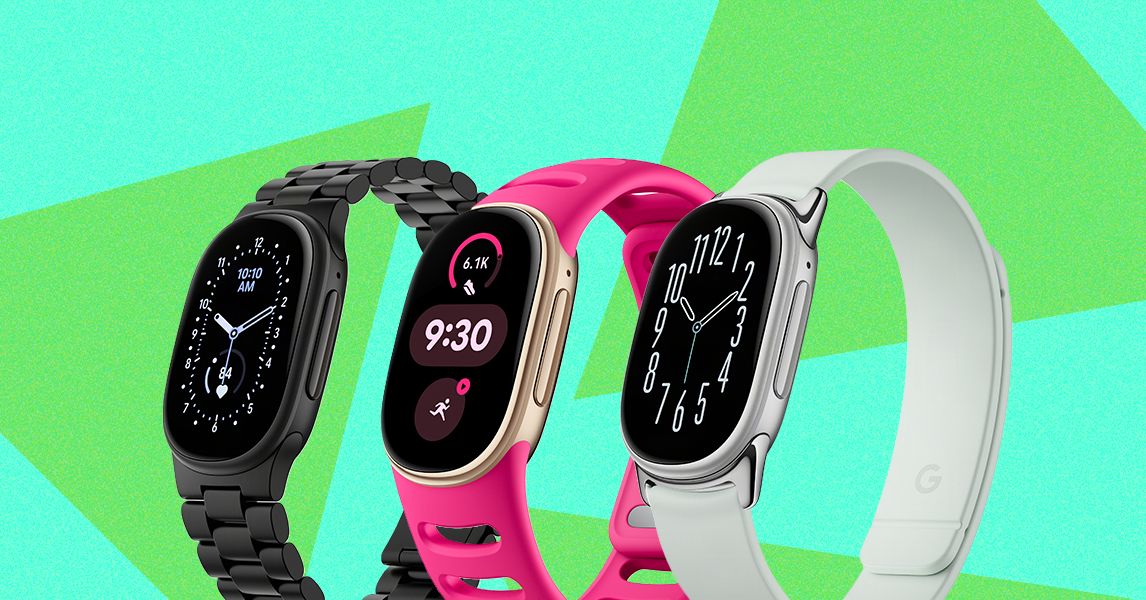
Announced on October 12, 2026, the Google Fitbit Edge is a significant update to the company’s fitness-tracker lineup. It features a larger AMOLED screen, built-in GPS, advanced health sensors, a replaceable battery, and Google’s increasingly ambitious AI-powered health ecosystem.
At €179.99 in Spain, it sounds like a compelling middle ground between a traditional fitness band and a smartwatch. But it also leaves out some features that were available on the older Fitbit Charge 6.
So is the Fitbit Edge a worthwhile upgrade, or would you be better off buying a discounted Charge 6, choosing the screenless Fitbit Air, or spending more on a Pixel Watch?
Here’s what the specifications actually tell us, where Google’s marketing deserves a closer look, and what to consider before buying.
The Fitbit Edge Is Really the Successor to the Charge 6
Google introduced the screenless Fitbit Air earlier in 2026, targeting people who wanted health tracking without another display demanding their attention.
The Fitbit Edge takes almost the opposite approach.
Rather than hiding your information in a smartphone app, it puts important metrics directly on your wrist. You can check your heart rate during exercise, see your pace while running, review notifications, and follow your progress throughout the day.
That makes the Edge a more natural successor to the Fitbit Charge 6 than a replacement for the Air.
The Charge 6, released in 2023, offered an effective combination of fitness tracking, a compact display, GPS, and everyday conveniences. But three years is a long time in wearable technology.
Google’s answer is not simply to add a bigger screen. The company has redesigned the interface, improved the location hardware, expanded its health ecosystem, and made repairability part of the product’s appeal.
In other words, the Edge is designed for people who want a dedicated fitness tracker but are not quite ready to give up the conveniences of a smartwatch.
Google Fitbit Edge Specifications at a Glance
- Announcement: October 12, 2026
- Retail availability: October 27, 2026
- Starting price: €179.99 in Spain; $179.99 in the US
- Display: 1.34-inch color AMOLED with optional always-on display
- Dimensions: 39.22 × 25.56 × 11.58 mm
- Weight: 17.7 g without the strap
- Processor: Ambiq AP5 microcontroller
- Battery: 65 mAh lithium-ion, replaceable design
- Advertised battery life: Up to 7 days; up to 2 days with always-on display enabled
- Charging: Approximately 90 minutes for a full charge
- GPS: Integrated multi-constellation satellite positioning
- Sensors: Optical heart rate, ECG-compatible electrical sensors, SpO2, skin temperature, altimeter, accelerometer, and gyroscope
- Resistance ratings: 5 ATM and IP68
- Connectivity: Bluetooth 5.4
- Phone compatibility: Android 11 or later and iOS 16.4 or later
- Companion app: Google Health
- Contactless payments: Not supported
These are manufacturer specifications, not measurements from independent AYXWORKS testing. For the complete details, consult the official Google Fitbit Edge technical specifications.
A Bigger Screen That Makes a Real Difference
The most immediately noticeable improvement is the display.
The Fitbit Edge features a 1.34-inch AMOLED screen, compared with the Charge 6’s much smaller 1.04-inch panel. Google says the new display provides approximately 46% more viewing area than its previous trackers.
That sounds like a modest numerical improvement, but think about how fitness trackers are actually used.
When you’re running, cycling, or lifting weights, you rarely want to stop and navigate through several menus just to check your heart rate or workout duration.
A larger display allows more information to remain visible at once. Combined with Google’s redesigned tiles and watch faces, this could make the Edge considerably more convenient during exercise.
There’s also a physical side button.
Touchscreens are convenient when you’re sitting at a desk. They’re less predictable when your fingers are sweaty or you’re trying to pause a workout in the rain.
The mechanical button gives the Edge a more reliable way to wake the display, navigate, and control certain exercise functions.
It’s a small design choice, but arguably more useful than another decorative watch face.
It looks like a small Pixel Watch, but it isn’t one
Google has borrowed interface ideas from the Pixel Watch 5, including glanceable tiles, customizable watch faces, and easier access to health statistics.
However, the Fitbit Edge does not run full Wear OS.
That distinction is important. You don’t get the same third-party app ecosystem or the freedom to install the smartwatch applications available on a Pixel Watch.
It’s a fitness tracker with selected smart features, not a miniature Wear OS smartwatch.
The Battery-Life Catch: Seven Days or Two?
Battery life is one of the Fitbit Edge’s biggest selling points, but it’s also where shoppers need to pay attention to the conditions behind the numbers.
Google advertises up to seven days on a single charge. That’s appealing if you’re accustomed to charging a smartwatch every day or two.
However, Google’s own support documentation specifies that enabling the always-on display reduces expected battery life to up to two days.
That’s a substantial difference.
If you usually wake the screen by raising your wrist or pressing the button, the seven-day estimate may be the more relevant comparison. If you want the time and information visible continuously, the Edge becomes much closer to a conventional smartwatch in terms of charging frequency.
Actual endurance will also depend on GPS sessions, notifications, display brightness, health tracking, and other settings.
Google’s advertised figures come from its own testing of pre-production hardware and software, not independent long-term testing of retail units.
Fast charging helps
The tracker supports a full charge in approximately 90 minutes.
Google also claims that five minutes of charging, when the battery is low, can provide up to one additional day of use under its stated test conditions.
That’s a useful feature for someone who remembers their nearly empty battery just before leaving for work.
Still, quick charging doesn’t eliminate the battery-life trade-off. If always-on display is essential to you, judge the Edge as a two-day tracker rather than a seven-day one.
The Replaceable Battery Is More Interesting Than It Sounds
Here’s arguably the Edge’s most meaningful engineering improvement.
Google has designed the Fitbit Edge with a replaceable battery and a more modular internal architecture.
That’s unusual in a device this small.
Many compact wearables are difficult to repair because batteries, adhesives, seals, and tightly integrated components make disassembly challenging.
When the battery eventually loses significant capacity, replacing the entire device often becomes the simplest option.
The Edge attempts to address that problem.
Its aluminum housing and internal construction are designed to support battery replacement, potentially extending the useful life of the tracker.
Important distinction: Replaceable does not mean you can casually swap the battery as if it were a remote-control battery. Google allows self-service repair but recommends professional assistance unless you have the technical expertise to repair electronics safely. Parts and repair options can also vary by region.
Opening a water-resistant wearable introduces additional complications. Seals can be damaged during disassembly, and restoring its original protection may require appropriate replacement parts and procedures.
That’s why repairability should be judged by more than the presence of a removable battery.
Before giving Google too much credit, we’ll need to see how affordable replacement parts are, whether reliable repair instructions are available, and how practical the process is for ordinary owners.
Even so, making battery longevity a design priority is a welcome direction for wearable electronics.
Google provides safety and repair guidance in its Fitbit Edge regulatory and repair documentation.
Built-In GPS and Better Workout Tracking
The Fitbit Edge includes integrated GPS, meaning you can record outdoor routes without depending on your smartphone’s location hardware.
Google claims the updated GPS chipset and housing design provide up to 40% better route-tracking accuracy than previous tracker generations.
That’s promising, but it remains a manufacturer performance claim until independent comparisons are available.
The distinction matters particularly for runners.
GPS inaccuracies can distort pace, distance, and route information, especially near tall buildings, in wooded areas, or on routes with frequent turns.
A useful independent test would compare the Edge against a known reference device over repeated runs, rather than relying on a single outdoor recording.
The Edge also includes an altimeter to track elevation changes. That adds useful information for hill running, hiking, stair climbing, and other activities where vertical movement contributes to physical effort.
Automatic activity detection gets smarter
Google’s October announcement describes support for more than 50 selectable exercise modes and automatic recognition of up to 100 types of activity.
The company’s newer activity-recognition system uses contextual information to help identify workouts, potentially reducing the need to start every session manually.
For example, a fitness tracker that recognizes repeated exercise patterns may be able to distinguish a regular workout more intelligently than one that relies only on simple movement thresholds.
But there are questions worth asking.
How consistently will it recognize short workouts? What happens when two activities produce similar movements? And how often might users have to correct an incorrectly classified session?
Those are the details that will determine whether smarter automation genuinely improves the experience.
Google’s promotional announcement and regional specification listings currently use different exercise-mode counts, so buyers should also confirm which features and modes are available on the device at purchase.
Advanced Health Tracking: Useful Insights, Important Limits
Like other modern Fitbit devices, the Edge goes well beyond counting steps.
Its sensors support continuous heart-rate tracking, sleep analysis, blood oxygen estimates, skin temperature trends, and electrocardiogram (ECG) functionality in supported markets.
One advantage of a lightweight tracker is that it may be more comfortable to wear overnight than a larger smartwatch.
For sleep tracking, consistency matters. Regular overnight measurements can be more useful for understanding changes over time than isolated readings.
Google also integrates the Edge with its expanded Google Health ecosystem, including personalized coaching and recovery recommendations.
What about blood pressure and insulin resistance?
Google is promoting wellness features that identify trends associated with blood pressure and insulin resistance.
These sound impressive, but they require careful interpretation.
The Fitbit Edge is not a replacement for a blood-pressure monitor or a medical glucose test.
Google explicitly states that its trend features are intended for general wellness information, not clinical diagnosis, real-time blood-pressure measurement, diabetes screening, or medication management.
Similarly, ECG functionality and irregular-heart-rhythm notifications have geographical and eligibility restrictions. Availability can depend on local regulatory approvals.
The sensible approach is to treat these features as supplementary information that may help you understand your habits and discuss concerns with a healthcare professional.
More data doesn’t automatically mean more accurate medical conclusions.
Google Health Premium: The Subscription Question
The Fitbit Edge comes with three months of Google Health Premium included.
Premium unlocks advanced features such as Gemini-powered personalized health coaching and certain wellness insights.
The coaching experience is designed to turn recorded metrics into recommendations, including activity plans and guidance based on recovery, workout habits, and personal goals.
That’s an interesting direction for fitness technology.
A tracker already knows how much you’ve moved, how long you’ve slept, and how your heart rate changes during exercise. The challenge is converting those measurements into advice that’s useful rather than repetitive.
But subscription pricing changes the long-term ownership calculation.
Consider two different purchases:
- Buying the Fitbit Edge for its display, GPS, heart-rate tracking, and basic workout features.
- Buying it primarily for personalized AI coaching and advanced Google Health Premium functionality.
The second depends more heavily on an ongoing paid service. Once the included trial expires, you’ll need to decide whether the extra guidance justifies the subscription.
Before purchasing, check the current local subscription price and exactly which functions remain available without Premium.
Also remember that AI-generated coaching is not a substitute for medical or professional training advice.
What the Fitbit Edge Doesn’t Have
Newer doesn’t always mean better in every category.
Despite the Edge’s upgraded screen, sensors, and construction, Google has omitted several capabilities that buyers might reasonably expect.
1. No Google Wallet or NFC payments
This is perhaps the most surprising omission.
The older Fitbit Charge 6 supported contactless payments through Google Wallet. The Fitbit Edge does not include the NFC hardware required for that functionality.
If you regularly pay for coffee or groceries with your wrist, moving from the Charge 6 to the Edge means losing a convenience rather than gaining one.
2. No microphone or speaker
The Edge can display incoming call notifications, but you cannot use it like a smartwatch to hold a phone conversation directly from your wrist.
It also doesn’t offer a built-in conversational Google Assistant or Gemini voice experience.
On supported Android phones, you can send predefined quick replies to messages. That’s useful, but it’s not equivalent to speaking or freely composing a response.
3. No full third-party smartwatch app ecosystem
Although the interface shares visual ideas with the Pixel Watch, this is not a full Wear OS device.
You get Google’s selected tracker applications and features rather than an open-ended collection of downloadable smartwatch apps.
4. Some advertised features are still rolling out
Google Maps turn-by-turn directions and selected health features are listed for rollout later in autumn 2026.
Don’t assume every advertised capability will be available on day one. Confirm the current software availability before buying for one particular feature.
Fitbit Edge vs Charge 6 vs Fitbit Air vs Pixel Watch 5
The right choice depends less on which device is newest and more on how you actually use a wearable.
Choose Fitbit Edge if you want a capable fitness tracker with a screen
The Edge makes sense if you value workout visibility, built-in GPS, a comfortable lightweight design, advanced health sensors, and a potentially longer hardware lifespan through battery replacement.
It offers a useful compromise between compactness and capability.
Consider the Charge 6 if payments and value matter
The Charge 6 is older and has a smaller display, but it still offers substantial fitness-tracking functionality and supports Google Wallet.
If you find it significantly discounted, the older model may be the more economical choice, provided its remaining software support and battery condition meet your needs.
For existing Charge 6 owners, the Edge is not an automatic upgrade.
Choose Fitbit Air if you prefer a screenless wearable
The Fitbit Air is intended for people who want passive health tracking without interacting with a display throughout the day.
Its simplicity is the main attraction.
If your priority is wearing something unobtrusive while checking most of your data on your phone, the Edge’s screen may add cost and complexity you don’t need.
Choose Pixel Watch 5 if you want a proper smartwatch
The Pixel Watch 5 is the more complete choice for users who want Wear OS applications, deeper smart features, more advanced wrist interactions, and contactless payments.
The trade-offs are greater cost, a larger watch form factor, and a different battery-life profile.
There’s no universal winner. A device that fits your routine is more useful than one with the longest feature list.
Should You Buy the Fitbit Edge?
At €179.99, the Fitbit Edge looks particularly attractive for buyers who want advanced fitness capabilities without moving to a larger smartwatch.
But because it has only just been announced, there’s not yet enough independent retail-unit testing to issue a firm verdict on comfort, GPS accuracy, battery endurance, or long-term reliability.
Before ordering, answer these five questions:
- Do you need Google Wallet? If yes, the Edge is not the right tracker.
- Will you use always-on display? If yes, plan around approximately two days of advertised battery life, not seven.
- Do you need third-party apps or wrist-based calls? If yes, compare a full smartwatch instead.
- Will you pay for Health Premium? Separate the features you need from those that require an ongoing subscription.
- Are repairability and compactness important? The replaceable battery and lightweight construction are meaningful advantages, but verify repair support in your region.
For a first-time fitness-tracker buyer, the Edge could be a strong candidate.
For someone who already owns a functioning Charge 6, waiting for independent reviews and comparing actual purchase prices is probably the smarter move.
Frequently Asked Questions
How much does the Google Fitbit Edge cost?
The Fitbit Edge starts at €179.99 in Spain and $179.99 in the United States. Prices vary by market and configuration. Additional straps and certain premium services may cost extra.
When is the Fitbit Edge release date?
Google announced the Fitbit Edge on October 12, 2026. Preorders are available, with retail availability scheduled for October 27, 2026.
How long does the Fitbit Edge battery last?
Google advertises up to seven days of battery life under specified conditions. With the always-on display enabled, the estimate falls to up to two days. Actual performance depends on settings and usage.
Can you replace the Fitbit Edge battery?
Yes. Google describes the battery as user-replaceable, but recommends professional repair unless you have appropriate electronics repair experience. Repair services and parts availability vary by region.
Does the Fitbit Edge work with iPhones?
Yes. It supports most iPhones running iOS 16.4 or later, as well as compatible Android devices running Android 11 or later. Some features, including Android-specific quick replies, differ between platforms.
Does Fitbit Edge support Google Wallet?
No. Unlike the Fitbit Charge 6, the Edge does not include NFC hardware for contactless payments.
Does the Fitbit Edge have GPS?
Yes. Built-in GPS allows outdoor route recording without carrying your smartphone. Google’s improved-accuracy claims still need independent verification.
Is the Fitbit Edge waterproof?
The Edge has 5 ATM and IP68 resistance ratings, but Google does not classify it as permanently waterproof. Resistance can diminish with age, damage, or repairs. Follow Google’s care recommendations, especially after battery servicing.
Our Take: The Most Interesting Upgrade Isn’t the Screen
At first glance, the Fitbit Edge looks like what you’d expect from a modern fitness tracker: a nicer display, improved sensors, a refined design, and smarter software.
But the replaceable battery may prove more important in the long term.
Wearable technology has spent years becoming thinner, more capable, and increasingly difficult to repair. A device that can remain useful beyond the normal lifespan of its original battery is a meaningful step in another direction.
Of course, Google still needs to demonstrate that battery replacement is practical and affordable, and the Edge’s compromises are real. The missing NFC chip is disappointing, and the seven-day battery claim deserves scrutiny if you want an always-on display.
For now, the Fitbit Edge looks like a promising fitness-focused alternative to a full smartwatch—not an obvious upgrade for everyone.
And that’s probably the right way to judge it: not by whether it does everything, but whether it does the things you actually care about.
Considering the Fitbit Edge? Check current availability, configurations, and pricing through the official Google Store in Spain.
Would you rather have a replaceable battery and a larger screen, or keep Google Wallet and a smaller design? Share which compromise matters most to you.
Sources and Further Reading
- Google: Official Fitbit Edge announcement, October 12, 2026
- Google Store Spain: Fitbit Edge technical specifications
- Google Health Help: Fitbit Edge setup, features, battery, and limitations
- The Verge: Fitbit Edge launch analysis
- WIRED: Google’s Fitbit Edge brings back the screen
Editorial note: This article is based on official product documentation and independently published launch coverage available October 13, 2026. It is not a hands-on product review. Features, pricing, and availability may change.