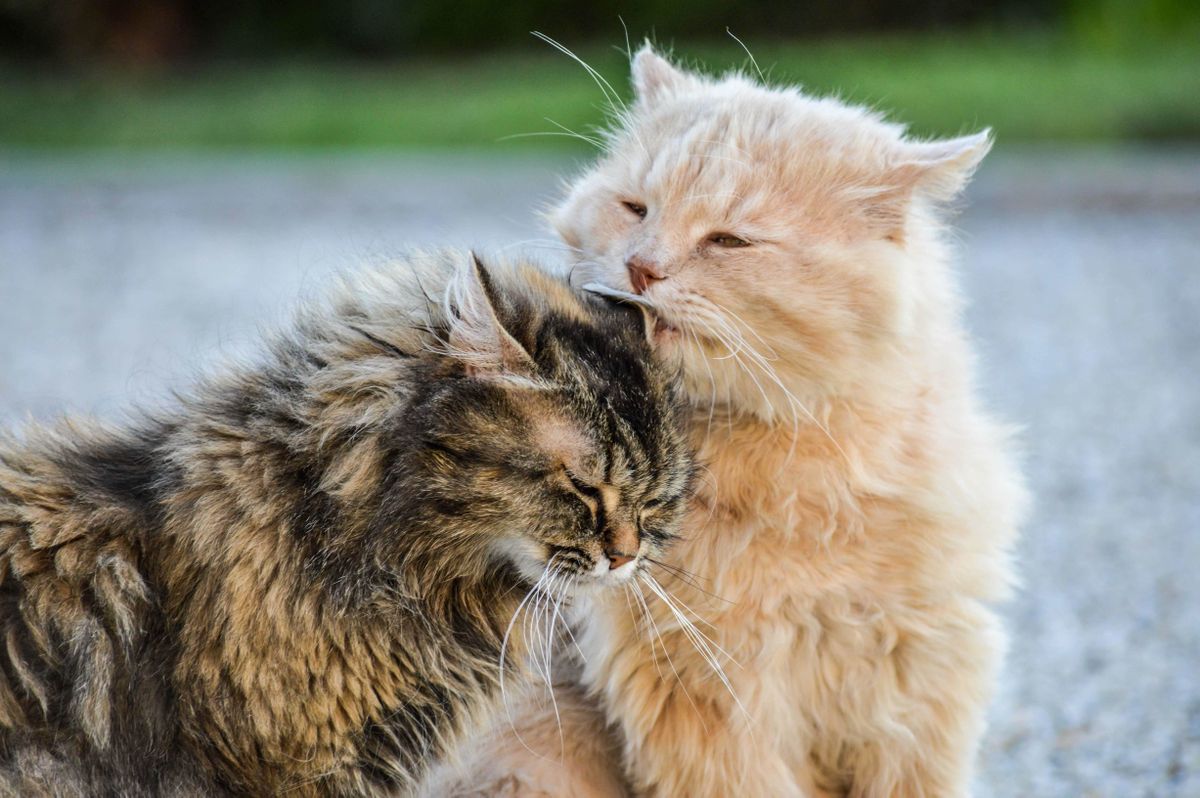
If you share your home with more than one cat, you’ve probably watched one feline lick another and assumed it’s a sign of affection. New research shows that this behavior, known as allogrooming, can carry very different meanings depending on the situation. Understanding when a lick is friendly and when it signals tension helps owners better interpret their cats’ social dynamics.
Image: smithsonianmag.com
Why This Matters
Understanding the subtle cues behind allogrooming helps cat owners prevent misunderstandings and reduce stress in multicat households. When a lick is mistaken for pure affection, owners might miss early signs of tension that could lead to conflict. Recognizing whether the grooming is bonding‑related or a polite way to claim a resource allows timely interventions, such as providing extra resting spots or separate feeding areas. This insight promotes a calmer environment and supports the cats’ emotional well‑being by acknowledging their sophisticated communication methods.
What Is Allogrooming?
Allogrooming refers to the act of one cat licking another, a behavior observed in many social animals. In cats, it typically involves gentle licking of the head, ears, or neck. While the motion looks similar, the underlying motivation can differ. Researchers have identified two primary contexts: social bonding, where cats seek physical closeness, and social tension, where a cat uses the lick to convey a subtle request for space or to avoid direct confrontation.
The Study Behind the Findings
Researchers at Ghent University, led by veterinarian Morgane Van Belle, collected video recordings of allogrooming from 53 households with two cats. They analyzed the animals’ body positions, the areas licked, and subsequent behaviors such as biting or withdrawal. The study, published in Applied Animal Behaviour Science, revealed that about 41 % of occasions when cats were inclined toward physical contact were followed by allogrooming. When the cats mirrored each other’s posture—both sitting or both lying—the interaction tended to be positive, often focusing on the head or ears. Source .
Social Bonding vs Social Tension
In bonding situations, the lick is relaxed and often precedes resting together or gentle play. The groomed cat usually shows calm body language, such as slow blinking or a relaxed tail. In contrast, when a cat wants a sunny spot already occupied, the lick frequently targets the neck and is followed by flattened ears, a quick bite, or the groomer walking away. Stress indicators like headshaking, lip licking, yawning, or scratching behind the ears appear more often in these tense exchanges, indicating the lick functions as a low‑key message rather than a friendly overture.
Allogrooming can signal affection, a request for space, or an invitation to play.
Positive grooming often involves the head or ears and mirrored body posture.
Tense grooming focuses on the neck and is accompanied by stress signs like flattened ears or lip licking.
How Cats Communicate Subtly
Cats possess a repertoire of subtle signals to manage conflict without escalating to aggression. Allogrooming serves as one such tool, allowing a cat to express a desire for space while avoiding a direct hiss or swat. Other low‑level cues include ear position, tail flicks, and brief glances. By recognizing these nuances, owners can better anticipate when a cat needs alone time or when a shared resource is causing friction, leading to a more harmonious home.
Tip: Provide multiple resting spots and observe body language—if a neck lick is followed by ear flattening, give the cat space.
What to Do Next
If you notice frequent neck licking paired with agitation, consider evaluating your home’s resource layout. Ensure each cat has access to preferred sleeping areas, litter boxes, and feeding stations. Introduce vertical spaces like cat trees or shelves to reduce competition. Monitor interactions for stress signals and separate the cats briefly if tensions rise. Over time, offering environmental enrichment and consistent routines can help shift the balance toward more positive social interactions.
Want more practical guides? Explore more Ayxworks insights and save this article for later.
FAQ
What does it mean when a cat licks another cat?
It can indicate affection, a desire to play, or a subtle request for space. The meaning depends on body posture, the area licked, and subsequent behavior such as relaxed resting or signs of tension like ear flattening.
Is allogrooming always a sign of affection between cats?
No. While allogrooming often occurs during bonding moments, it can also be used to convey tension without escalating to a fight. Researchers found that in about half of the observed cases, the lick preceded stress signals, indicating a more complex social function.
How can I tell if my cats are experiencing tension during grooming?
Look for stress cues such as flattened ears, headshaking, lip licking, yawning, or scratching behind the ears. If the lick is focused on the neck and followed by a bite or the groomer walking away, the interaction likely reflects a request for space rather than pure affection.
Does allogrooming ever lead to play between cats?
Yes. In some instances, a cat initiates grooming on the neck as a prelude to playful biting and chasing. The neck area is sensitive and often involved in play, so a lick there can transition into a friendly romp when both cats show relaxed body language and reciprocal interest.
Should I intervene when I see neck licking followed by biting or scratching?
If the biting is mild and part of play, observation is usually sufficient. However, if the interaction escalates to aggressive biting, hissing, or prolonged avoidance, it’s wise to separate the cats temporarily and assess environmental triggers such as limited resting spots or competition for resources.
Can allogrooming help reduce conflict in multicat homes?
When used as a bonding behavior, allogrooming reinforces social ties and promotes calm. Recognizing the contexts in which it occurs allows owners to address underlying tensions—by adding resources or adjusting layouts—thereby encouraging more positive grooming episodes and lowering overall stress.
External Sources and Further Reading
For more details on the study, see the original Smithsonian Magazine article .
Worth noting
This point stands on its own and does not need extra caveats to be useful.