On this page
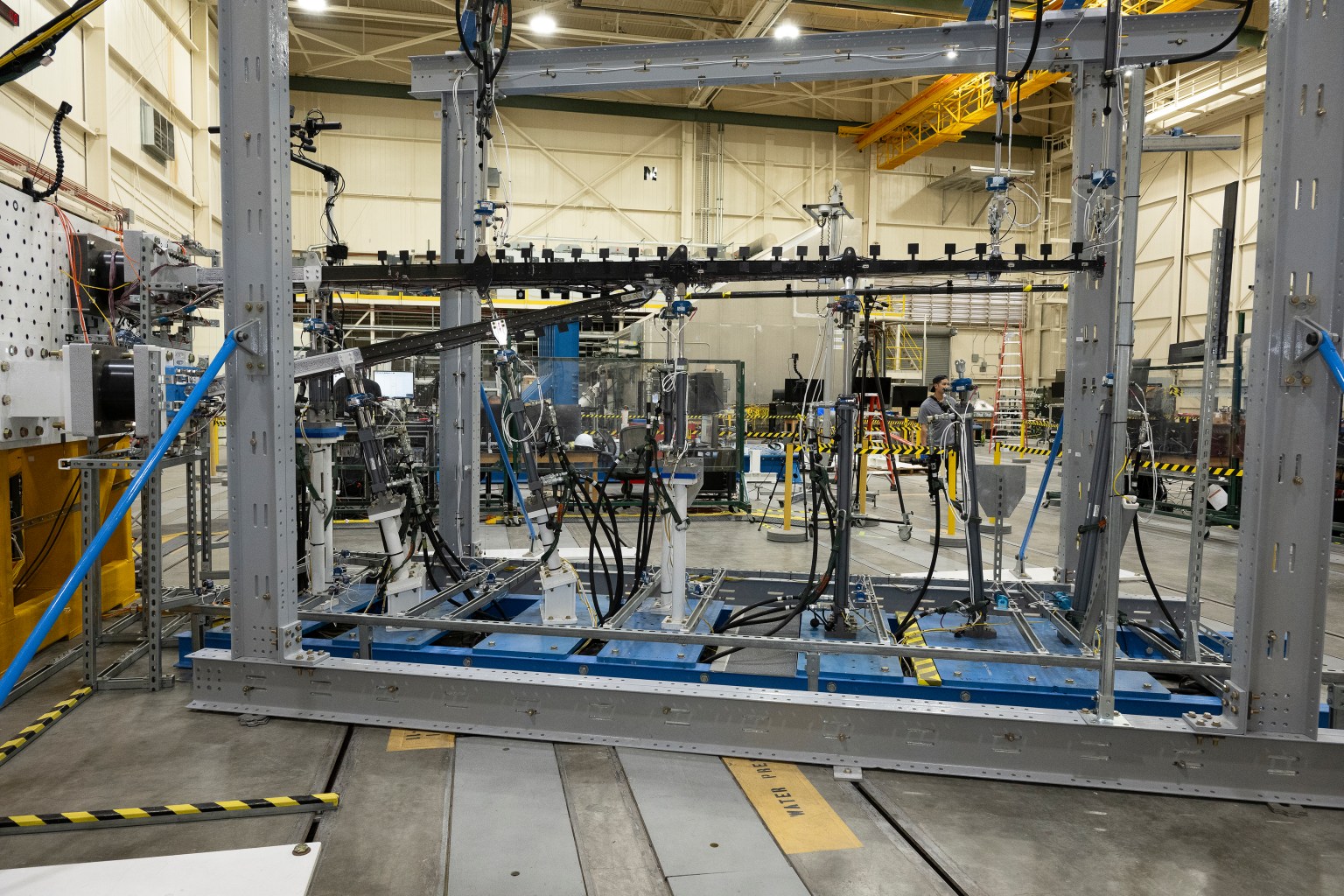
NASA’s SWEET-15 test is a simple idea with serious engineering behind it: build a small but realistic truss-braced wing, load it in a laboratory, and watch exactly how it bends before a future aircraft ever leaves the ground. The 15-foot Structural Wing Experiment Evaluating Truss-bracing model was tested at NASA’s Armstrong Flight Research Center in Edwards, California, after being designed and fabricated at NASA’s Langley Research Center in Hampton, Virginia.
Key Points
- SWEET-15 stands for Structural Wing Experiment Evaluating Truss-bracing.
- The test connects to NASA’s Subsonic Flight Demonstrator project and future fuel-saving airliner concepts.
- Fiber-optic strain sensors and load sensors helped compare real bending behavior with computer model predictions.
Why This Matters
Most people hear “new wing design” and picture a finished airplane. SWEET-15 is earlier and more useful than that. It is a test article, meaning engineers can push it hard, inspect the damage, and learn before committing to a full-scale design. NASA’s focus is the long, thin wing shape supported by an aerodynamic strut, a layout related to the earlier Transonic Truss-Braced Wing concept.
The plain version is that longer wings can help an aircraft fly more efficiently, but longer wings also flex. A support strut can help carry those loads, while engineers study how the wing, main strut, jury strut, composite covers, and joints behave together.
What NASA Tested
The SWEET-15 article was not a toy model. NASA says the 15-foot-long test article combined five advanced composite manufacturing and assembly technologies. Langley handled design, analysis, manufacturing, safety preparation, and lab setup before the wing went to Armstrong for the loads work.
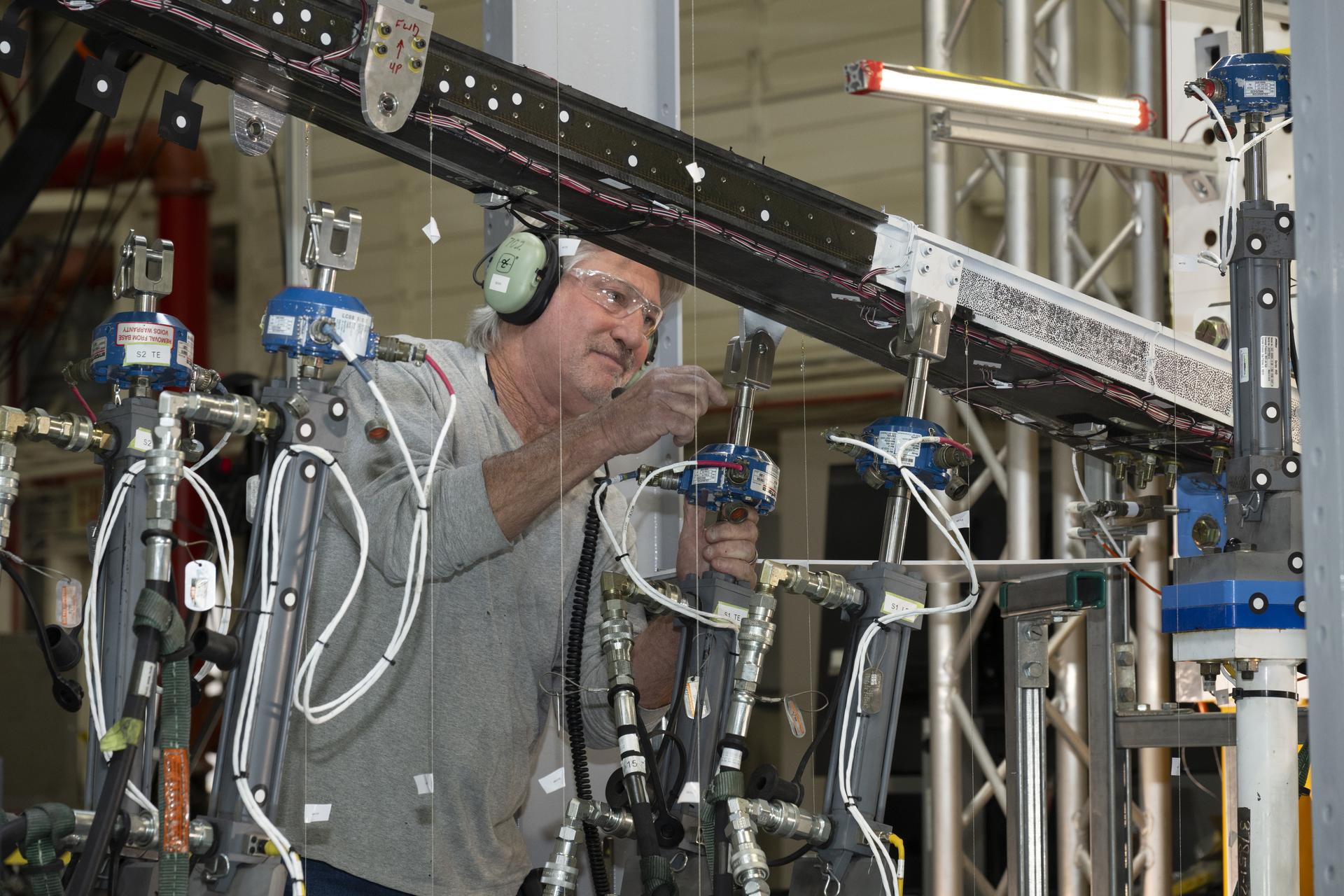
During testing, engineers intentionally bent the wing over several months. They placed strain and load sensors throughout the structure, including fiber-optic strain sensors. Those readings showed how different areas responded as the load increased. The important result was that the data matched NASA’s computer predictions well enough to give the team confidence in both the model and the new ways of connecting wing parts.
The Simple Analogy
Think of a long shelf mounted to a wall. If the shelf is short, it may hold weight without much support. If it is long and thin, it needs smart bracing or it will sag. A truss-braced wing works in a similar everyday sense: the long wing gets help from a strut, but the attachment points and the skin still need to carry forces cleanly.
SWEET-15 is NASA’s way of asking, “Where does this shelf really bend, and what breaks first if we keep adding load?” That is why the test-to-failure step matters. Engineers did not stop as soon as the expected flight loads were met. They kept increasing load beyond the design limit so they could see the actual failure path instead of guessing it from a simulation.
The 127% Detail
The headline number is that the structure failed at roughly 127% of its design limit load. In simple terms, the test wing survived the forces it was designed to represent and then kept going for a meaningful margin before visible damage appeared. NASA reported that damage showed near the back edge of the wing and in the upper wing cover.
That failure location is not just a dramatic ending. It tells engineers where future designs may need changes, especially around the joints connecting the wing to the main strut and the smaller jury strut.
What the Sensors Proved
The sensor work is the quiet star of the article. Numerous strain and load sensors let the team compare the physical wing against computer models while the structure was being loaded. NASA also points to its Fiber Optic Sensing System, a technology used to collect data on aircraft and spacecraft, as part of the agency capability behind this kind of structural evaluation.
When real data lines up with analysis, engineers gain confidence that their design tools are telling the truth. When the data does not line up, they learn where the model needs work. In this case, NASA says the data confirmed predictions and supported confidence in the manufacturing approaches used in SWEET-15, including work connected to the Integrated Structural Assembly of Advanced Composites robot at Langley.
What Changes for Future Aircraft
No one should read this as a finished airliner announcement. The better takeaway is that NASA now has a stronger evidence base for future ultra-efficient aircraft work. A representative composite truss-braced wing configuration has gone through structural evaluation, including normal expected loads and a deliberate over-limit failure.
That can help the Subsonic Flight Demonstrator project decide what to improve next. Researchers will analyze the collected data with special attention to composite structures, strut connections, load paths, and manufacturing methods.
Plain-English takeaway: SWEET-15 is not about proving that one exact wing is ready for passengers. It is about proving that NASA can build, measure, bend, and learn from a realistic truss-braced composite structure before scaling ideas into future aircraft programs.
What to Do Next
If you are a casual reader, remember three terms: SWEET-15, truss-braced wing, and 127% design limit load. Those capture the core story without requiring aerospace math. If you follow aviation or manufacturing, the deeper point is the combination of composite assembly, fiber-optic sensing, and test-to-failure data.
For Ayxworks readers interested in robotics and automation, the Integrated Structural Assembly of Advanced Composites robot is also worth noting: advanced manufacturing is part of how these lightweight structures become possible.
Want more practical guides? Explore more Ayxworks insights and save this article for later.
FAQ
What is SWEET-15?
SWEET-15 is NASA’s 15-foot Structural Wing Experiment Evaluating Truss-bracing test article, a composite wing model used to study how a long, thin, strut-supported wing behaves under load.
Where was the wing tested?
The wing was tested in the Flight Loads Laboratory at NASA’s Armstrong Flight Research Center in Edwards, California, after design and fabrication work at NASA’s Langley Research Center in Hampton, Virginia.
Why does 127% matter?
The wing ultimately failed at roughly 127% of its design limit load, which means it survived the expected design-load target before engineers pushed it further to learn where damage would appear.
What is a truss-braced wing?
It is a wing layout where a long wing is supported by an aerodynamic strut. The support can help with efficiency goals, but engineers must prove the loads and joints behave safely.
Does this mean a new NASA airliner is ready?
No. SWEET-15 is a structural research test, not a finished aircraft. Its value is the data it gives NASA for future ultra-efficient aircraft and Subsonic Flight Demonstrator work.