On this page
Between 2016 and 2022, archaeologists working along the planned A14 corridor between Cambridge and Huntingdon uncovered more than 280,000 artifacts spanning roughly 12,000 years of human activity. Among the most puzzling finds was a single ditch at the Bar Hill site in Cambridgeshire that yielded about 8,000 amphibian bones, a concentration that senior zooarchaeologist Vicki Ewens described as extraordinary for a British site.
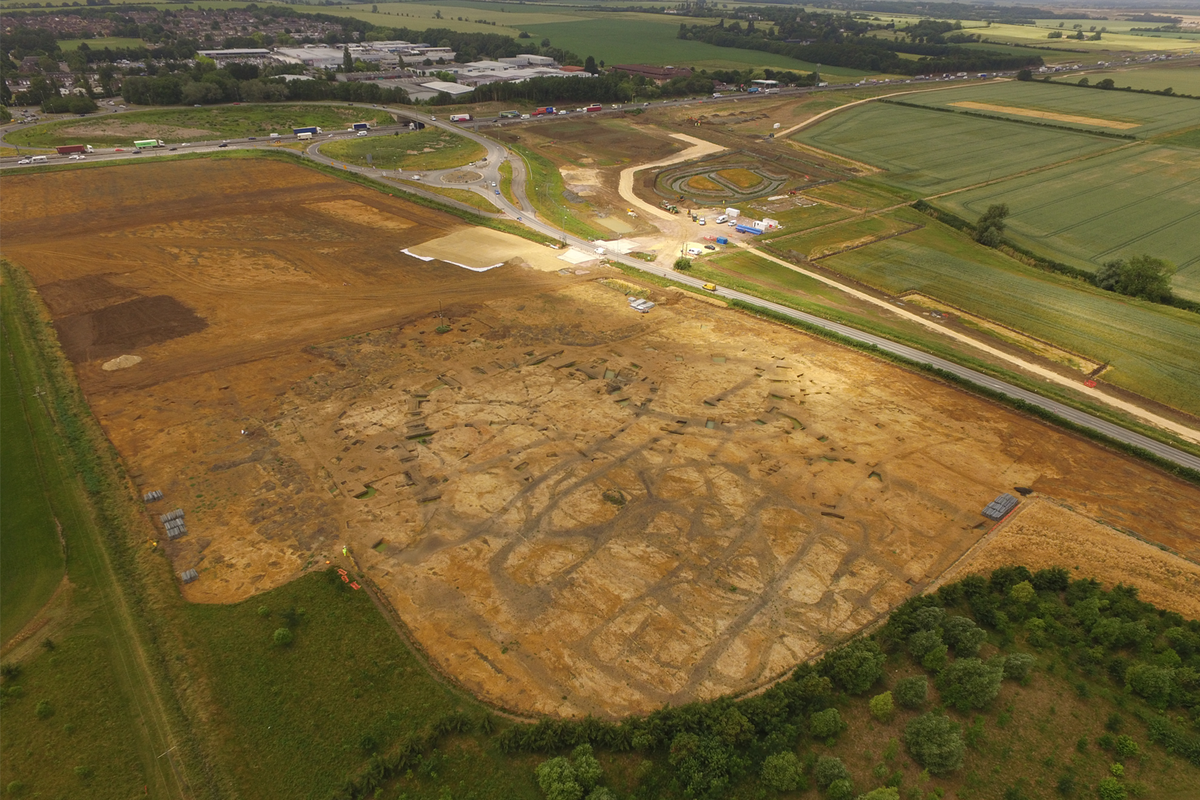
The Bar Hill find shows how Roman‑era land clearance and shifting water levels turned a wetland into a frog boom that birds of prey quickly exploited, illustrating a clear chain from human activity to predator‑prey dynamics. For modern ecologists and land managers, the case provides a concrete example of how habitat alteration can cascade through food webs, informing current wetland restoration and grazing policies to avoid similar unintended consequences.
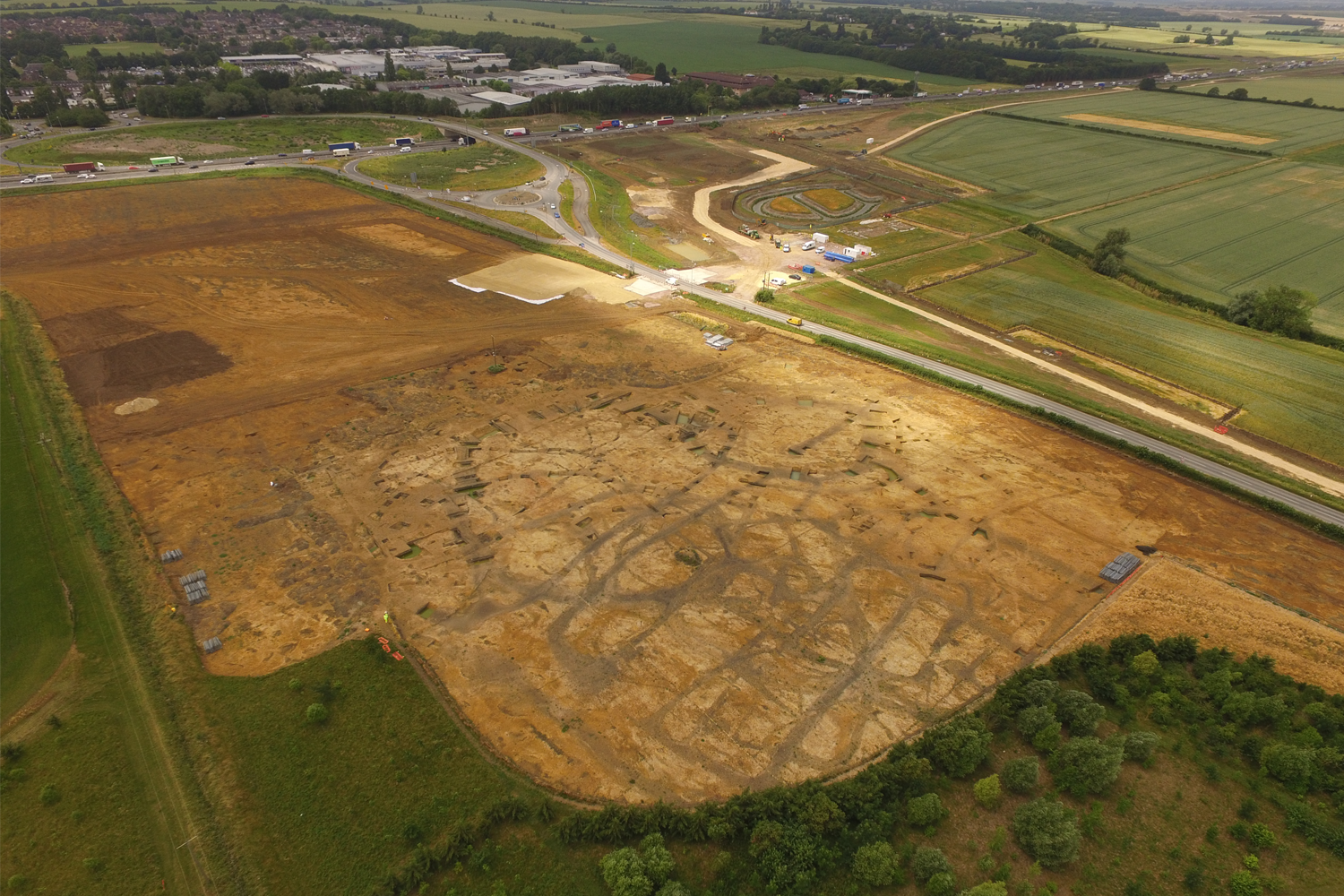
Discovery at Bar Hill
The Bar Hill ditch was initially interpreted as a roundhouse enclosure dating to the Iron Age (c. 750 BCE). Radiocarbon dating of the amphibian remains, however, shifted the deposition to the second or third century CE, placing it firmly in the Roman era. The assemblage represents at least 469 individual animals, predominantly common frogs, with a smaller number of toads, shrews, voles and mice.
The Puzzle of 8,000 Frog Bones
Ewens and her colleagues at the Museum of London Archaeology (MOLA) considered several scenarios: accidental trapping in the gully, winter hibernation mortality, or human consumption. The absence of cut marks on the bones made a dietary explanation unlikely, and the sheer volume argued against a simple natural die‑off.
Environmental Context: Fen Water Levels and Human Activity
Research published in Environmental Archaeology shows that during the Roman period water levels in the Fens receded, causing ponds to dry out faster and prompting frogs to breed more rapidly. Simultaneously, local communities cleared trees for grazing livestock, removing the woodland cover that normally shields amphibians from aerial predators. These combined changes created a landscape where large numbers of juvenile frogs were exposed on open ground.
Bird Predation Evidence
To determine the cause of death, the team measured the distal humeri (arm bones) of the frogs — a method refined in a 2025 paper by Paul Clarkson and co‑authors. The data indicate that most individuals died in their first or second year, during a concentrated predation window from autumn through the following spring, likely along migration routes to hibernation sites. Breakage patterns and light digestive etching on the bones match the feeding signatures of medium‑sized raptors such as short‑eared owls and hen harriers, while ruling out otters, herons and grass snakes.
- Over 8,000 amphibian bones recovered from a single ditch.
- Radiocarbon dates place the deposit in the 2nd–3rd century CE.
- Bone histology shows juveniles dominated the assemblage.
- Digestive traces point to short‑eared owls as primary predators.
Ruling Out Alternative Explanations
The presence of a Roman‑era brooch among the bones was the only hint of possible human deposition, but the authors argue the mass predation event occurred precisely because people — and their dogs — were absent from the area during autumn and winter. Seasonal livestock movement or ritual avoidance are offered as plausible reasons for this human vacancy.
Note: The brooch does not indicate intentional bone placement; it likely entered the ditch incidentally.
Why This Matters
This case demonstrates how a seemingly minor faunal assemblage can illuminate both past ecosystems and human land‑use patterns. The frog bones reveal a snapshot of Roman‑period wetland dynamics, showing how hydrological change and deforestation reshaped predator‑prey relationships. As Ewens observes, even the smallest recovered animal helps reconstruct the wider landscape in which people lived.
What to Do Next
Read the full study in Environmental Archaeology for the detailed osteological methodology. Explore the MOLA project page for the A14 excavations to see how this find fits within the broader artifact assemblage. Consider how similar multi‑proxy approaches could be applied to other wetland sites where amphibian remains are abundant but understudied.
Tip: When evaluating unusual bone concentrations, combine taphonomic analysis with paleoenvironmental data to distinguish natural mortality from predator accumulation.
Want more practical guides? Explore more Ayxworks insights and save this article for later.
FAQ
How many frog bones were found at Bar Hill?
Approximately 8,000 amphibian bones were recovered from a single ditch during the A14 excavations.
What species of frogs were identified?
The majority belong to the common frog (Rana temporaria), with a smaller number of common toads (Bufo bufo).
What caused the mass mortality?
Analysis of bone breakage and digestive etching indicates predation by medium‑sized birds of prey, chiefly short‑eared owls, during a short seasonal window.
Why were so many juvenile frogs present?
Lowered fen water levels during the Roman period accelerated breeding, producing large cohorts of young frogs that were exposed after woodland clearance.
Did humans play a role in depositing the bones?
Only a single Roman brooch was found among the remains; researchers conclude the bones accumulated naturally because people avoided the area seasonally.
Where can I read the original research?
The peer‑reviewed article appears in Environmental Archaeology and is summarized in the Smithsonian Magazine piece linked below.