On this page
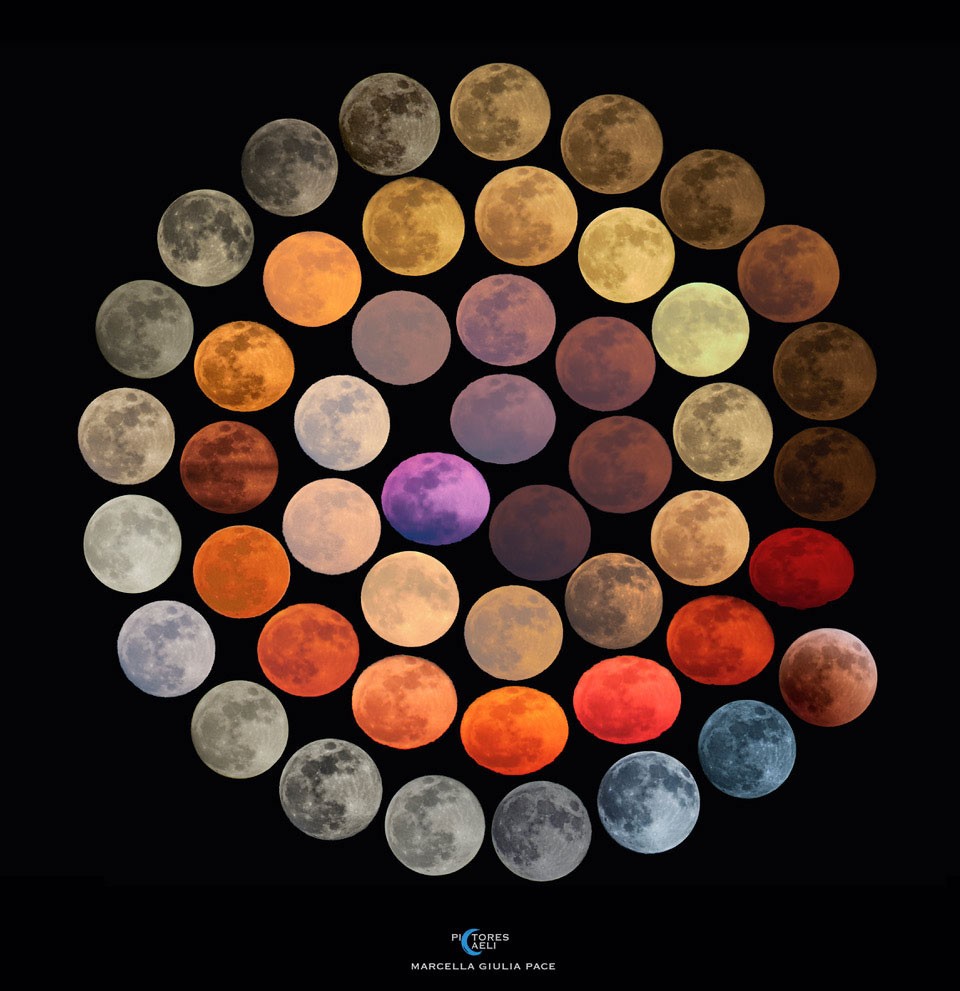
NASA’s Astronomy Picture of the Day for 1 November 2026 presents a striking collage of full‑moon hues captured by a single astrophotographer over ten years across Italy. The image reminds us that the Moon’s apparent color is not fixed; it shifts with the atmosphere, the Moon’s altitude, and rare events like eclipses.
NASA’s Astronomy Picture of the Day series brings professional astronomical imagery directly to the public, and this lunar color portrait offers more than visual appeal. By revealing the Moon’s subtle mineral variations through enhanced color, it helps anyone understand how surface composition maps to future landing sites and resource planning. Teachers gain a ready-made visual for planetary science lessons, while space enthusiasts see the same data that guides Artemis mission decisions. The image transforms abstract spectral data into an accessible view of our nearest neighbor’s geologic story.
What the Image Shows
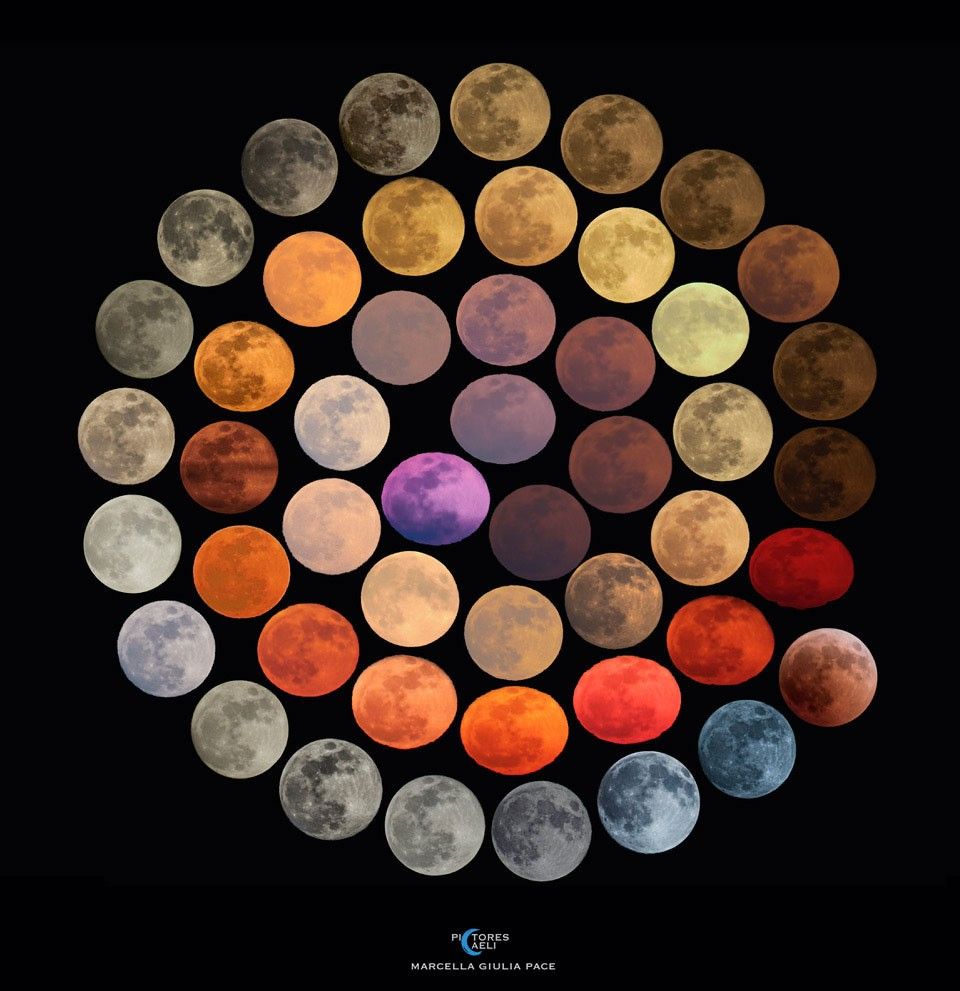
The APOD picture assembles dozens of full‑moon frames, each displaying a distinct tint ranging from deep brown‑gray to vivid red, yellow, blue, and an enigmatic purple. The photographer, Marcella Giulia Pace, recorded these variations from multiple Italian sites, demonstrating that the same lunar surface can look dramatically different on different nights.
Outside Earth’s atmosphere the Moon is a uniform brown‑tinged gray, reflecting sunlight without any color filter. All the colors we see from the ground are imposed by the air between us and the Moon, a point emphasized in the APOD explanation.
Atmospheric Effects on Moon Color
When the Moon sits low on the horizon its light travels a longer path through the atmosphere. Shorter blue wavelengths are scattered away, leaving the longer red and yellow wavelengths to dominate, which is why a rising or setting Moon often looks amber or crimson.
Fine dust or pollution particles enhance this scattering, deepening the red hue. The APOD notes that a red‑ or yellow‑colored Moon usually indicates a horizon view through a dust‑laden atmosphere.
- Longer atmospheric path = more blue scattering = redder Moon.
- Fine dust intensifies the effect.
Rare Blue and Purple Moons
A blue‑tinted Moon is far less common. It appears when the atmosphere contains larger particles—such as volcanic ash or certain smoke aerosols—that scatter red light more efficiently than blue, allowing the blue component to reach the observer.
The purple Moon in the series remains unexplained; the APOD description suggests it may be a combination of several scattering effects occurring simultaneously. No single mechanism has been confirmed.
Lunar Eclipse Red Hue
The final frame in the collage captures the total lunar eclipse of July 2018. During totality the Moon glows a faint red because sunlight is refracted through the thin ring of Earth’s atmosphere surrounding the planet, filtering out blue light and projecting a sunset‑like glow onto the lunar surface.
This “blood Moon” effect is a direct demonstration of atmospheric refraction rather than surface changes on the Moon itself.
During a total eclipse the Moon turns a faint red because sunlight is refracted through Earth’s atmosphere.
A Decade of Lunar Photography
Marcella Giulia Pace’s ten‑year project required consistent equipment, careful timing, and travel to varied Italian locales—from coastal plains to mountainous sites—to sample different atmospheric conditions. The long baseline makes the collection a valuable visual dataset for studying atmospheric optics.
Such citizen‑science efforts complement professional observations, offering a ground‑level perspective that satellites cannot replicate. The APOD explanation highlights that the images were gathered from different locations across Italy over a full decade, underscoring the dedication needed to capture the full palette of lunar colors.
Observing the Moon’s Colors Yourself
The APOD explanation ends with a direct invitation: “Have you ever seen an unusually colorful Moon?” This prompt encourages skywatchers to note the Moon’s altitude, weather conditions, and any recent volcanic or fire activity when a vivid hue appears. Comparing personal observations with the collage helps identify which scattering regime is at work.
If you enjoy astrophotography, try replicating a single‑color series over several months; the exercise builds both technical skill and a personal atmospheric record.
Why This Matters
Understanding why the Moon changes color sharpens our grasp of atmospheric physics, aerosol behavior, and light scattering—processes that also affect climate modeling, air‑quality monitoring, and remote‑sensing calibration.
For skywatchers, the knowledge turns a casual glance at a colorful Moon into a real‑time diagnostic of the air above them.
What to Do Next
Next time you see a vividly colored Moon, note its altitude, the weather, and any recent volcanic or fire activity. Compare your observation with the APOD collage to identify which scattering regime is at work.
Want more practical guides? Explore more Ayxworks insights and save this article for later.
FAQ
Why does the Moon look red near the horizon?
At low altitude the Moon’s light passes through more atmosphere, scattering away blue wavelengths and leaving red and yellow to dominate.
What causes a blue Moon?
Larger atmospheric particles such as volcanic ash preferentially scatter red light, allowing blue light to reach the observer.
Is a purple Moon a real phenomenon?
Yes, but its exact cause is still unclear; it likely results from a mix of scattering effects occurring together.
How does a lunar eclipse change the Moon’s color?
During totality sunlight is refracted through Earth’s atmospheric ring, filtering out blue light and casting a reddish glow on the Moon.
Can I photograph these colors myself?
Absolutely. A DSLR or mirrorless camera on a tripod, a telephoto lens, and patience across different nights and elevations will capture the same palette.