On this page
The latest edition of MIT Technology Review’s The Download spotlights two breakthroughs that could change how we treat trauma and power vehicles. A DARPA program aims to turn blood into a lightweight, long‑lasting powder, while WeLion New Energy pushes semi‑solid‑state cells toward higher energy density and safer operation. Both projects are still in development, but their timelines and technical hurdles are worth tracking.
The Military’s Quest for Shelf‑Stable Blood
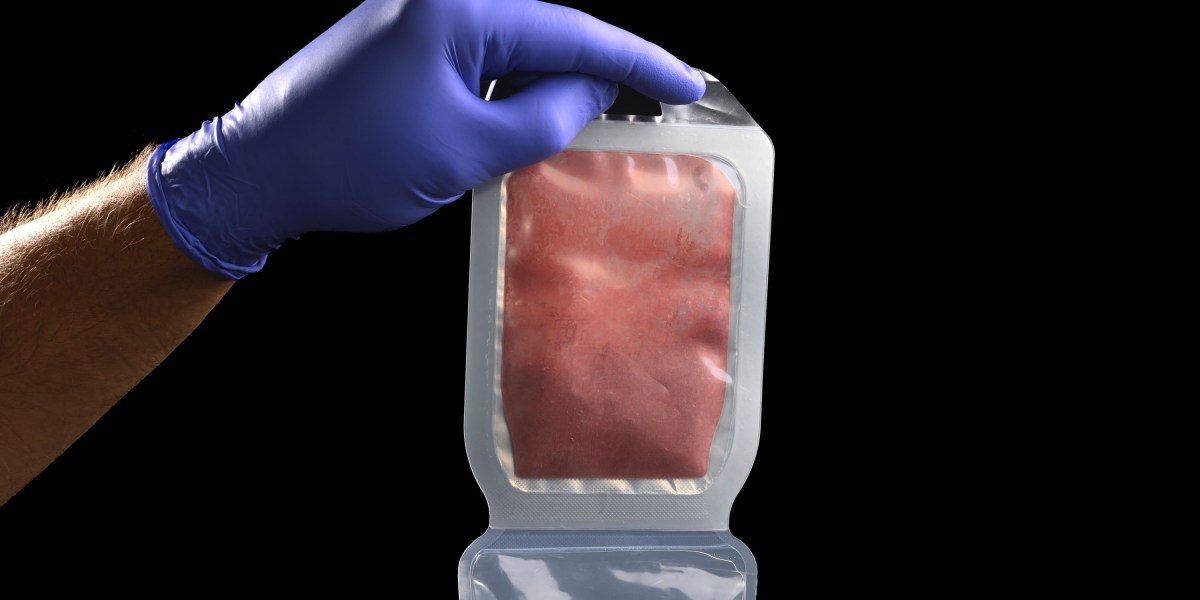
In February 2007 a U.S. helicopter ferrying blood to a field hospital was shot down in Iraq, killing all seven crew members. The incident underscored the logistical fragility of liquid blood, which spoils within weeks and requires cold‑chain transport. DARPA now funds a $73 million program to produce dried plasma, platelets, and red cells that can sit on a shelf for years and be rehydrated on demand source.
DARPA’s $73 Million Program
The initiative spans multiple contractors and academic labs. Their goal is to have field‑ready bags of dried blood products by 2029. Researchers must solve three core problems: preserving cell viability after lyophilization, preventing immune reactions, and ensuring rapid reconstitution under combat conditions.
Key Points
- Target deployment: 2029
- Products: dried plasma, platelets, red cells
- Main technical risks: viability, immunogenicity, reconstitution speed
Challenges of Synthetic Blood
Even if drying works, the body’s response to rehydrated cells is uncertain. Early animal studies show promise, but human trials have not yet begun. Regulatory pathways for a product that straddles biologics and devices add another layer of complexity.
Note: The program’s success hinges on parallel advances in freeze‑drying technology and battlefield logistics.
WeLion’s Semi‑Solid‑State Batteries
Chinese startup WeLion New Energy earned a spot on MIT Technology Review’s 2026 Climate Tech Companies to Watch. Their liquid‑solid hybrid cells combine a solid electrolyte framework with a liquid‑phase cathode, delivering higher energy density than conventional lithium‑ion packs while reducing fire risk source.
Energy Density and Safety Gains
In 2023 WeLion supplied Nio with a pack achieving over 1,000 km (620 mi) on a single charge. The company now targets cells exceeding 400 Wh/kg, a figure that would surpass most commercial lithium‑ion batteries. The solid scaffold suppresses dendrite growth, a common cause of short circuits.
Tip: When evaluating next‑gen batteries, compare both gravimetric energy density and thermal runaway temperature — WeLion publishes both metrics in its technical white papers.
Scaling Production Hurdles
Moving from pilot lines to mass manufacturing requires new electrode coating equipment and supply‑chain agreements for solid‑electrolyte precursors. Cost parity with lithium‑ion remains elusive; WeLion acknowledges that economies of scale and material sourcing are the primary bottlenecks.
Why This Matters
Shelf‑stable blood could revolutionize trauma care in remote or conflict zones, reducing dependence on donor networks and cold storage. Simultaneously, safer, higher‑capacity batteries accelerate the transition to electric transport and grid storage, cutting emissions across sectors. Together, they illustrate how defense funding and climate‑tech innovation can converge on dual‑use technologies.
What to Do Next
Professionals in medtech should monitor DARPA’s solicitation announcements for partnership opportunities. Energy engineers can benchmark WeLion’s published cell data against their own roadmaps. Investors may watch for Series C rounds that signal manufacturing readiness. Staying informed through reputable outlets like MIT Technology Review ensures you catch milestones as they happen.
Want more practical guides? Explore more Ayxworks insights and save this article for later.
10 Climate Tech Companies to Watch: WeLion New Energy and its semi-solid-state batteries WeLion New Energy is one of MIT Technology Review’s 10 Climate Tech Companies to Watch 2026 , available exclusively to subscribers .
The Chinese company’s liquid-solid hybrid cells aim to pack more power into electric cars, boats and drones, potentially improving safety and offering greater energy density than lithium-ion batteries.
In 2023, WeLion released a battery pack with EV-maker Nio that offered a range of over 1,000 kilometers.
—You Xiaoying Subscribers can now access the full 10 Climate Tech Companies to Watch , spanning everything from geothermal power plants to carbon dioxide batteries .
MIT Technology Review Narrated: Weight-loss drugs show signs of slowing biological aging, say drugmakers Popular weight-loss drugs may do more than help people shed pounds.
Drugmakers Eli Lilly and Novo Nordisk say patients taking their GLP-1 drugs age less quickly, according to molecular “aging clocks” that track changes in DNA or levels of key proteins.
FAQ
What is the timeline for DARPA’s dried blood products?
The program aims to field‑test deployable bags by 2029, though human trials have not yet started.
How does WeLion’s hybrid battery differ from solid‑state designs?
It retains a liquid cathode within a solid electrolyte matrix, offering a compromise between energy density and manufacturability.
Are there any commercial products using WeLion cells today?
Yes, Nio’s 2023 EV model shipped with a WeLion pack delivering over 1,000 km range.
What are the main safety concerns for dried blood?
Potential immune reactions, loss of clotting function, and sterility during rehydration are under investigation.
When might semi‑solid‑state batteries reach cost parity with lithium‑ion?
Analysts estimate mid‑2030s, contingent on scaling solid‑electrolyte supply chains.
External Sources and Further Reading
- MIT Technology Review – The Download: faking blood and the future of batteries
- IEEE Spectrum – IEEE Continues Preparations for the Realignment of Its Regions