On this page
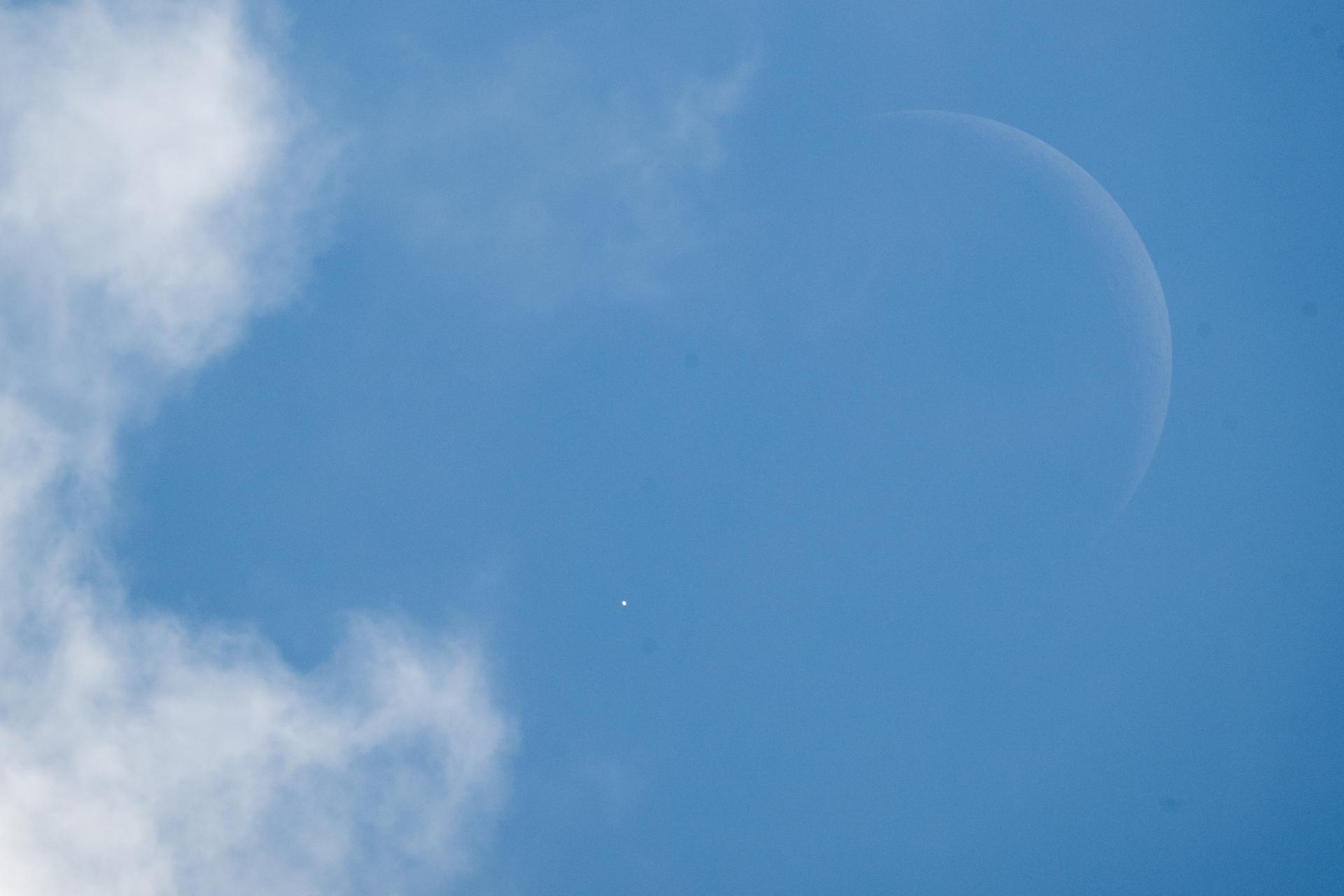
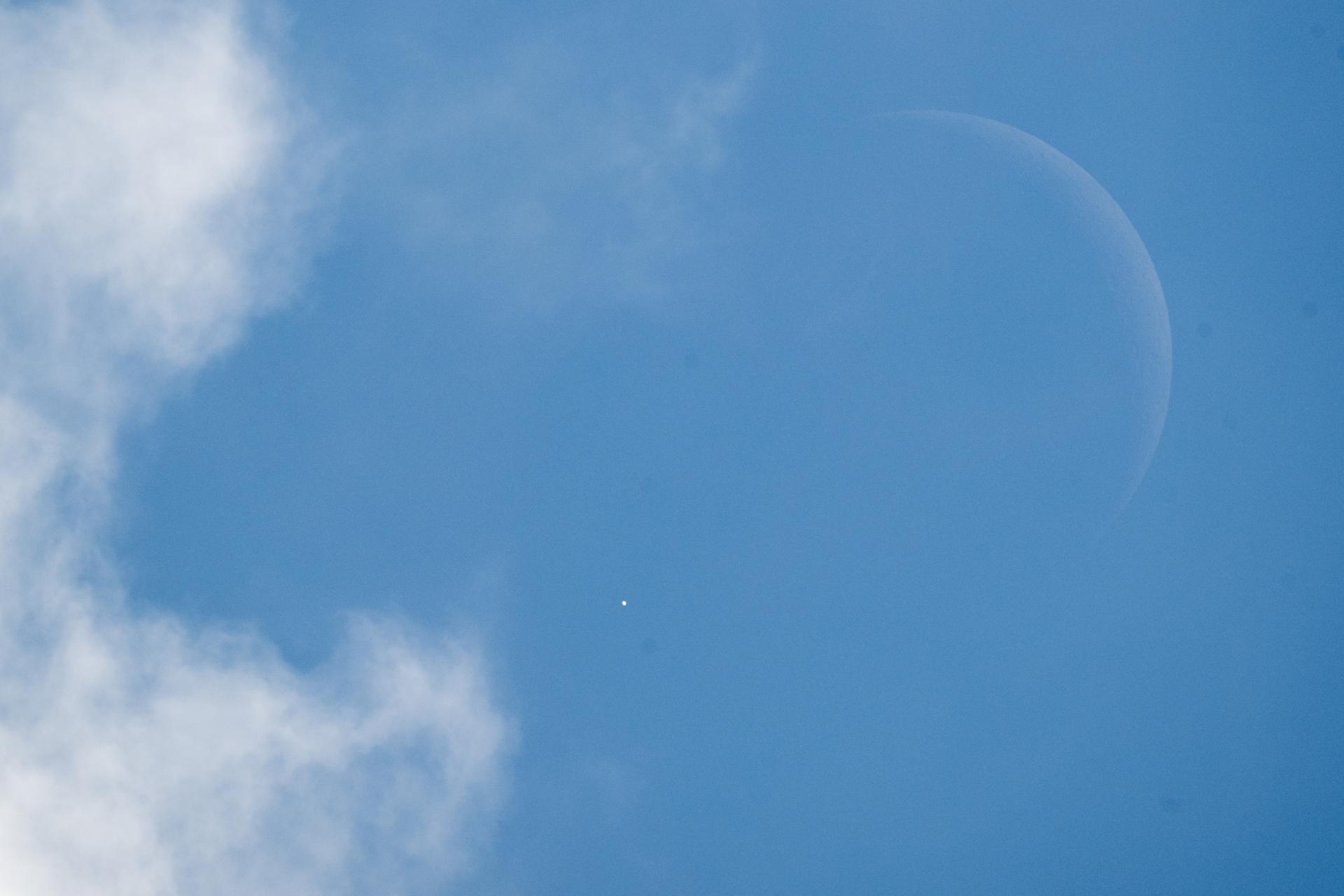
A lunar occultation sounds technical, but the basic idea is simple: from our point of view on Earth, the Moon passes directly in front of another object in the sky and hides it for a short time. NASA’s September 4 image article highlighted one of these events involving Venus, photographed from the Mary W. Jackson NASA Headquarters building in Washington after skywatchers in the United States and parts of Canada saw the planet disappear behind the Moon on June 17, 2026.
Key Points
- A lunar occultation happens because the Moon is close enough to Earth to visibly slide across background objects.
- The June 17, 2026 Venus occultation was unusual because observers could catch it in daytime from the United States and parts of Canada.
- NASA’s published image credits Joel Kowsky and shows Venus disappearing behind the Moon from the Mary W. Jackson NASA Headquarters building.
What NASA Reported
NASA’s image article, credited to the HQ Web Team and Gary Daines, focuses on a rare skywatching moment: Venus being hidden by the Moon during daylight. The photo caption identifies Venus at the start of the occultation on June 17, 2026, with the view captured from NASA Headquarters in Washington. That framing matters because it makes the event more than a diagram in a textbook. It was visible, photographed, and tied to a specific place and date.
The source also gives the simple definition. A lunar occultation occurs when the Moon moves in front of another celestial object as seen from Earth. The object is not actually touched by the Moon; it only lines up behind it from our viewpoint. That is why the same event can be visible from some parts of Earth and invisible from others. The alignment is local, not universal.
The ELI5 Version
Imagine holding up your thumb and covering a streetlight across the road. Your thumb is not touching the light. It is just much closer to your eye, so it can block your view. A lunar occultation works in the same kind of visual geometry. The Moon is our nearby “thumb,” Venus is the distant bright object, and Earth is where the observer is standing.
That also explains why timing and location are so important. Two people in different places can see different sky alignments because their lines of sight are slightly different. Someone in the right path sees Venus slip behind the Moon. Someone outside the path may see the two objects close together without one hiding the other.
Why Daytime Made This Stand Out
Venus is bright enough that experienced observers can sometimes spot it in daylight when they know where to look. Even so, a daytime occultation is harder to follow than a night event because the sky is bright and contrast is lower. The June 17 report is interesting because the Moon and Venus lined up in a way that gave observers across the United States and parts of Canada a daytime show rather than a typical night-sky event.
For casual skywatchers, the practical lesson is that the Moon can act like a moving pointer. When a bright object such as Venus is close to the Moon in the sky, it is often easier to locate. That does not mean anyone should stare near the Sun or use binoculars carelessly in daylight. It means planned skywatching requires a reliable event map, safe viewing habits, and exact local timing.
What Happens During An Occultation
The event has two main moments. First, the object disappears as the Moon’s edge moves over it. Later, it reappears from the other side. With Venus, the view can be especially striking because the planet is bright and can show a small disk or phase through optical equipment. To the eye, the effect is simpler: a bright point or tiny planet vanishes where the Moon’s edge crosses it.
The Moon moves steadily across the sky because of its orbit around Earth. Against the background of stars and planets, that motion is fast enough for occultations to be noticeable on human timescales. Venus, by comparison, is not dodging behind the Moon. The Moon is simply changing our view faster because it is much nearer.
The Remaining 2026 Chances
NASA’s article says June 17 was the first of three Venus occultations in 2026. The next listed opportunity is September 14, visible from parts of Asia, Africa, Europe, and western Russia. The final listed opportunity is November 7, visible from southern South America. Those regions matter because an occultation path is like a shadow track for visibility: if you are outside it, the alignment will not look the same.
Anyone planning to watch should check a local astronomy calendar closer to the date. Exact times depend on city, horizon, daylight conditions, and the Moon’s position. A general NASA article is useful for understanding the event, but local observing data is what tells a viewer whether the Moon and Venus are safely visible from their own location.
Why It Matters
Events like this are useful because they turn orbital mechanics into something observable. The phrase “line of sight” can feel abstract until the Moon covers a planet and then uncovers it again. That moment shows that astronomy is not only about distant objects; it is also about where the observer stands and how moving objects line up from that position.
It is also a good reminder that NASA image articles can be educational even when they are brief. This one gives a real date, location, photographer credit, visible regions, and follow-up dates. Those details are enough to explain the phenomenon without overcomplicating it or pretending the article is a full observing guide.
What To Do Next
If you only want the takeaway, remember this: the Moon can hide Venus because it is close to us and moves across our line of sight. If you want to observe a future occultation, start with the September 14 and November 7 windows from NASA’s article, then verify local visibility with a trusted astronomy source for your exact city.
For families or classrooms, this is a strong demonstration topic. Use a small ball close to your eye and a lamp across the room to show how a nearby object can cover a faraway one. Then connect that simple model back to the Moon, Venus, Earth, and the specific June 17, 2026 event photographed from Washington.
Ayxworks Takeaway
The simple version is enough to understand the headline: a lunar occultation is a temporary hiding act created by alignment. NASA’s June 17 Venus example is memorable because it happened in daylight, was visible across parts of North America, and has two more 2026 follow-up opportunities for other regions. The science is geometry, but the experience is seeing a familiar planet vanish behind the Moon.
Want more practical explainers? Explore more Ayxworks guides for plain-English explanations of science, technology, tools, and everyday systems.
FAQ
What is a lunar occultation?
It is when the Moon passes in front of another celestial object from our viewpoint on Earth, briefly blocking that object from sight.
Was Venus actually behind the Moon?
It was behind the Moon from the observer’s line of sight. Venus was still much farther away in space; the Moon only blocked the view.
When did this Venus occultation happen?
The NASA image article describes the event on Wednesday, June 17, 2026, with a photograph taken from the Mary W. Jackson NASA Headquarters building in Washington.
Will there be more Venus occultations in 2026?
Yes. NASA lists September 14 for parts of Asia, Africa, Europe, and western Russia, and November 7 for southern South America.
Is it safe to look for Venus in daytime?
Daytime skywatching needs caution because the Sun can be nearby in the sky. Use reliable local guidance and never point binoculars, telescopes, or cameras near the Sun without proper solar-safety equipment.