On this page
When educators and teens team up with real NASA data, something powerful happens: abstract science becomes tangible, local, and actionable. That’s exactly what unfolded in July 2026 at the Center for Astrophysics | Harvard & Smithsonian, where a hands-on institute brought together educators and the BEST AQI project to explore how NASA’s TEMPO mission can empower young people to investigate air quality in their own neighborhoods.
Key Points
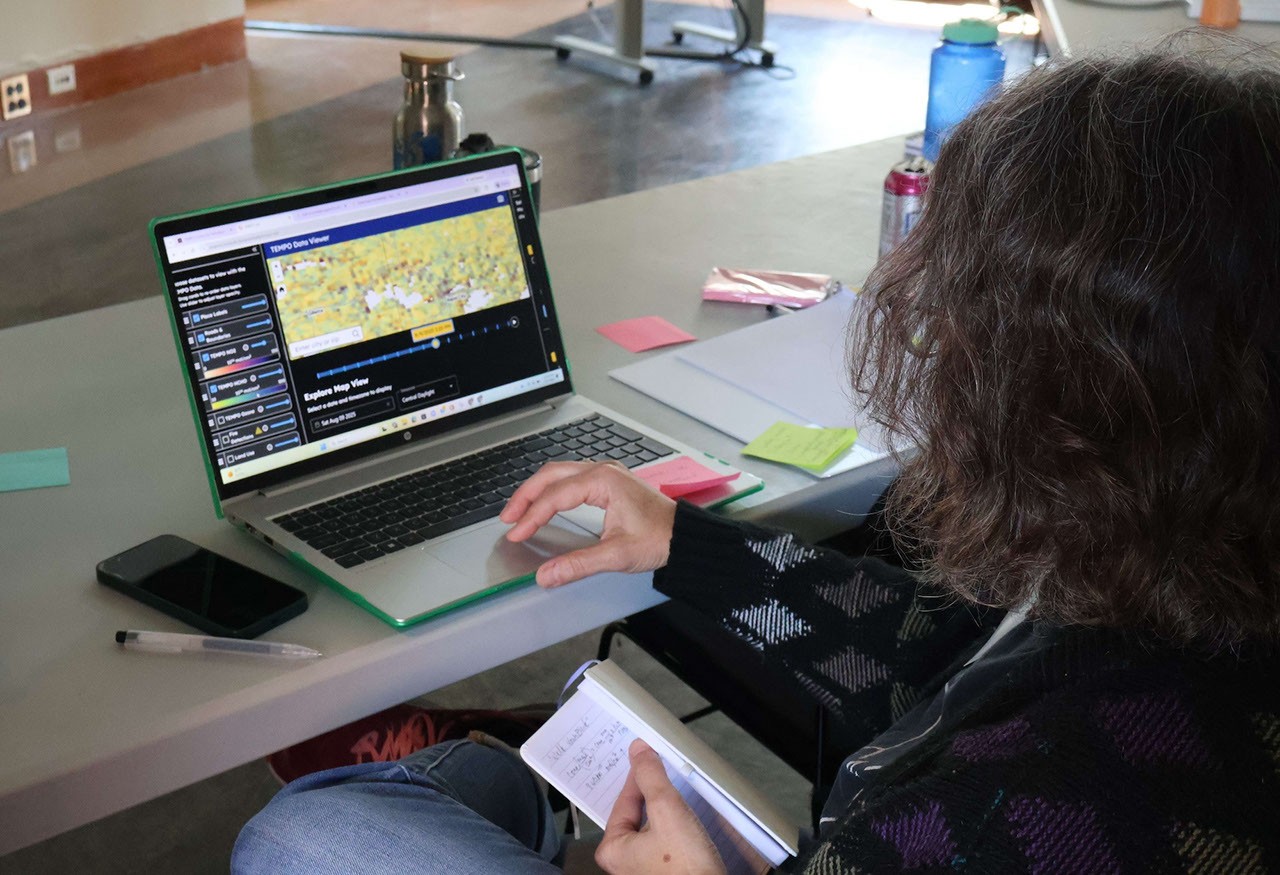
- On Day 1 of the Institute, the CosmicDS Science Principal Investigator Pat Udomprasert led a hands-on immersion session introducing educators to TEMPO-Lab, a free online tool built with NASA Science Activation Program funding.
- TEMPO-Lab lets learners explore and analyze near-real-time air quality measurements collected by NASA’s TEMPO (Tropospheric Emissions: Monitoring of Pollution) mission, which measures pollution across North America hourly during daylight hours.
- During Days 2 and 3 of the Institute, as educators worked together to co-develop BEST AQI curriculum and resources, they used TEMPO-Lab to build case studies covering a variety of real-world air quality scenarios, including wildfire smoke and emissions from rush-hour traffic, power plants, and agriculture.
What Is TEMPO and Why Does It Matter for Air Quality?
NASA’s TEMPO (Tropospheric Emissions: Monitoring of Pollution) mission collects hourly air quality measurements across North America during daylight hours. It tracks key pollutants like nitrogen dioxide, formaldehyde, and ozone, providing a detailed, near-real-time view of what’s in the air we breathe. Unlike ground monitors that are sparse and fixed, TEMPO orbits Earth and delivers comprehensive spatial coverage, making it ideal for tracking pollution from sources like traffic, power plants, wildfires, and agriculture.
For educators and students, this means access to authentic, professional-grade data that reflects real-world conditions. TEMPO doesn’t just show pollution levels — it reveals patterns, hotspots, and changes over time, helping learners connect atmospheric science to their daily lives.
How the CosmicDS and BEST AQI Partnership Works
The Cosmic Storytelling with NASA Data (CosmicDS) project, led by Harvard University, focuses on bringing NASA data into classrooms through intuitive tools and educator support. In July 2026, CosmicDS teamed up with the Smithsonian Institution’s BEST AQI (Breathing Easier: Supporting Teen Air Quality Investigations) project to host a Leadership Institute at the Center for Astrophysics | Harvard & Smithsonian.
Thirteen formal and informal educators — advisors to BEST AQI — participated in the three-day event. Their role is to guide teens through air quality investigations that start with curiosity and end with community action. By training these educators, the partnership aims to amplify impact: each educator will share the toolkit with others, potentially reaching hundreds more teachers and thousands of students.
Hands-On Learning with TEMPO-Lab
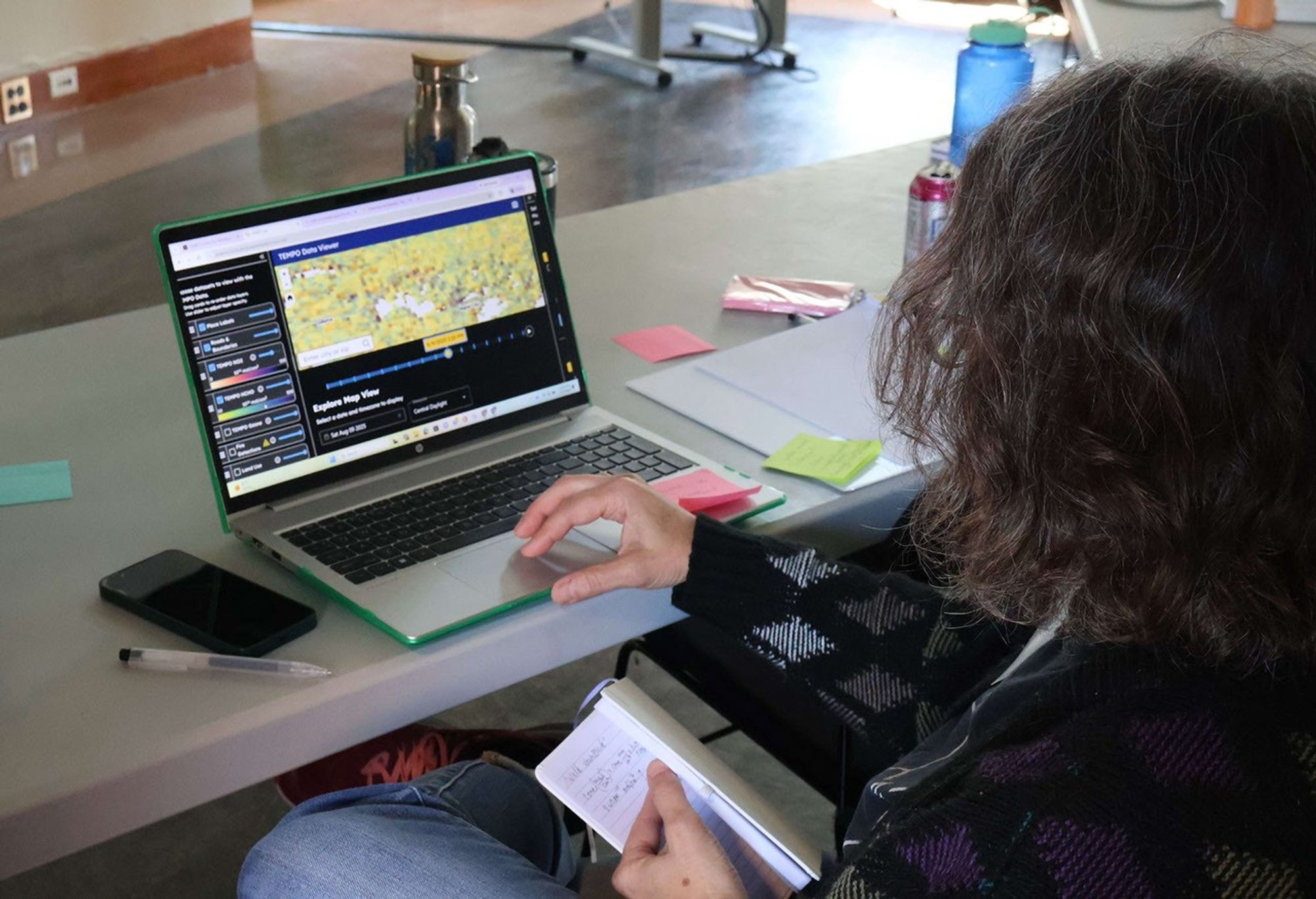
On the first day of the Institute, educators were introduced to TEMPO-Lab, a free online tool developed with NASA Science Activation funding. TEMPO-Lab lets users visualize and analyze TEMPO data without needing advanced technical skills. During the session, led by CosmicDS Science Principal Investigator Pat Udomprasert, educators explored how to navigate the platform, filter data by location and time, and interpret pollution trends.
What makes TEMPO-Lab especially valuable is its accessibility. It runs in a web browser, requires no installation, and presents data in clear, interactive formats. This lowers the barrier for educators who may not have a background in atmospheric science but want to bring real data into their lessons.
Real-World Case Studies: From Wildfires to Rush Hour
During Days 2 and 3, educators collaborated to co-develop curriculum and resources for the BEST AQI program. Using TEMPO-Lab, they built case studies based on actual air quality scenarios: wildfire smoke plumes, rush-hour traffic emissions, power plant output, and agricultural activities. These examples were chosen because they are relevant, observable, and impactful in many U.S. communities.
By working through these cases, educators created ready-to-use materials that teens can adapt to their own environments. A student in South Dakota might study agricultural burning, while one in Maryland investigates highway pollution, and a teen in New York looks at winter heating effects. The goal is to ground abstract concepts in lived experience.
Why This Matters
Air quality is something teens can see, smell, and feel — whether it’s haze on the horizon, smoke from a distant fire, or exhaust near a busy road. The BEST AQI initiative leverages that direct experience, guiding students to turn observation into evidence. With tools like TEMPO-Lab, they can collect data, identify trends, and propose actions — such as advocating for cleaner transportation or supporting green spaces.
This process builds critical skills: data literacy, scientific reasoning, and civic engagement. These abilities transfer far beyond the classroom, supporting success in any career path. More importantly, it empowers young people to see themselves as agents of change in their communities.
Accessing Cutting-Edge Data: The New Ozone Beta Product
One highlight of the Institute came during a science briefing, when TEMPO scientist Heesung Chong announced that a new beta-version ground-level ozone data product was now available. Thanks to TEMPO-Lab’s flexible design, software developer and educator John Lewis integrated the update overnight. The next morning, educators were exploring this fresh data — a rare example of how NASA-backed tools can keep pace with rapidly evolving science.
Ozone is a key air quality concern, especially in summer when sunlight drives its formation. Having access to near-real-time ozone measurements lets students study pollution events as they happen, deepening their understanding of atmospheric chemistry and health impacts.
What to Do Next
Educators interested in using TEMPO-Lab can access it directly at https://projects.cosmicds.cfa.harvard.edu/tempo-lab. The CosmicDS project website, https://cosmicds.cfa.harvard.edu, offers additional resources, background on the Science Activation Program, and details about the cooperative agreement (80NSSC21M0002) that supports this work.
The 13 educators from the Leadership Institute plan to share the BEST AQI toolkit and TEMPO-Lab with approximately 100 additional educators across partner sites in South Dakota, Maryland, and New York. This multiplier effect could extend the reach to thousands of teen-led air quality investigations, amplifying the impact of authentic NASA data in education.
Want more practical guides? Explore more Ayxworks insights and save this article for later.
FAQ
What is the TEMPO satellite, and what does it measure?
TEMPO (Tropospheric Emissions: Monitoring of Pollution) is a NASA satellite instrument that measures air pollutants across North America hourly during daylight hours. It tracks nitrogen dioxide, ozone, formaldehyde, and other compounds to provide a detailed, near-real-time picture of air quality.
Is TEMPO-Lab free to use, and do I need special training?
Yes, TEMPO-Lab is a free online tool that runs in a web browser. It requires no installation or advanced technical skills. Educators can start exploring data immediately, though the CosmicDS project offers guidance and training materials to support effective classroom use.
How can students use TEMPO data to investigate local air quality?
Students can use TEMPO-Lab to explore pollution patterns in their area — such as spikes from traffic, wildfires, or industrial activity — and compare them over time or across locations. By grounding their investigations in real data, they can identify trends and propose informed actions to improve air quality in their communities.
What is the BEST AQI project, and who is it for?
BEST AQI (Breathing Easier: Supporting Teen Air Quality Investigations) is a Smithsonian-led initiative that guides teens through hands-on air quality research. It helps students turn personal observations of pollution into evidence-based understanding and community action, supported by educator advisors and tools like TEMPO-Lab.
How does the new ozone data product enhance learning?
The recently released beta ground-level ozone data from TEMPO allows students to study a key pollutant that forms in sunlight and affects respiratory health. Its integration into TEMPO-Lab means learners can access cutting-edge science almost as soon as it becomes available, reinforcing the connection between classroom learning and real-time NASA research.
External Sources and Further Reading
For more information on the TEMPO mission and its data products, visit the official NASA TEMPO mission page. To learn about upcoming NASA Earth science events, review the 2026 IGARSS Hyperwall Schedule . For insights into polar temperature changes, see NASA’s PREFIRE mission coverage in Sensing the Poles’ Hidden Heat .