On this page
Archaeologists working in Egypt’s western desert have uncovered a remarkably preserved Byzantine-era settlement hidden in the Dakhla Oasis. The mud‑brick town reveals streets, homes, a basilica and everyday objects that illuminate life in a Christian community from the fourth century.
Why This Matters
The site offers a rare snapshot of provincial life in the eastern Roman Empire after Christianity became the state religion. Its well‑preserved architecture and artifacts help scholars understand how imperial policies filtered down to remote oasis communities (source).
Discovery of the Byzantine Town
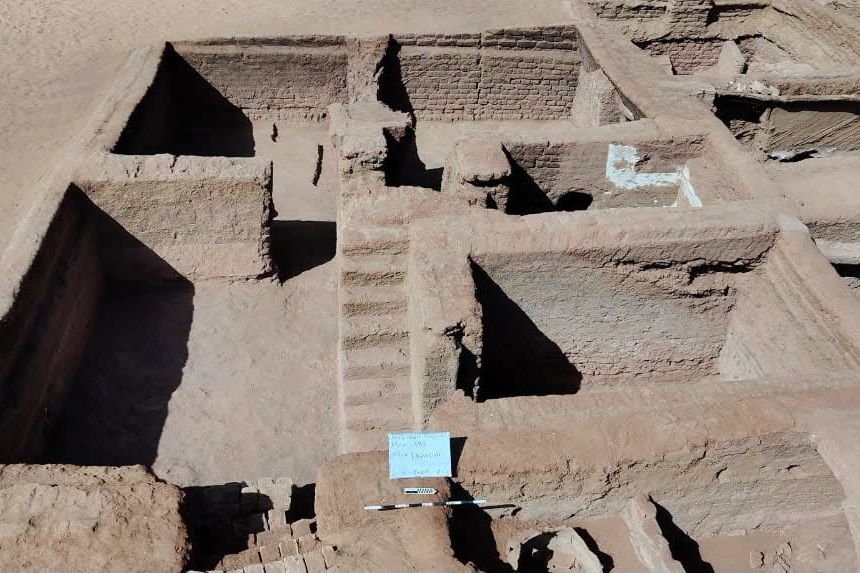
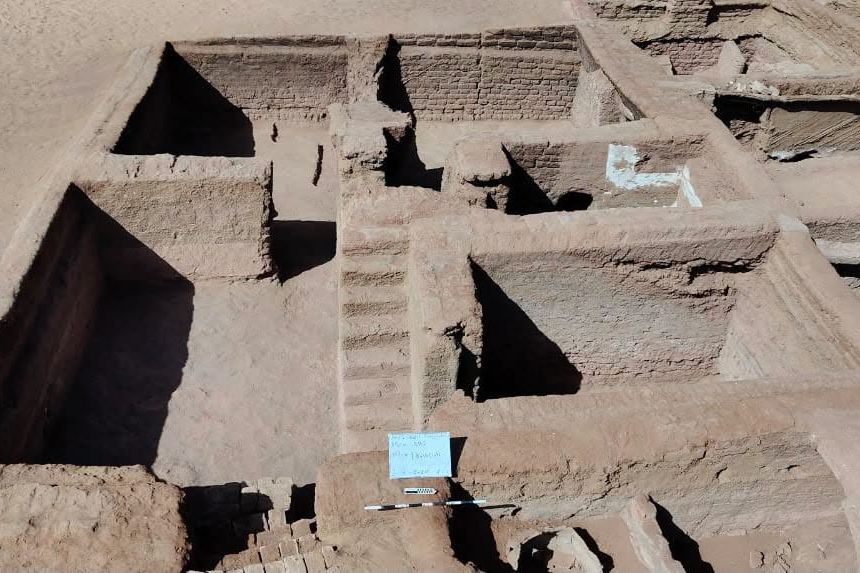
Excavations revealed a settlement laid out on a clear grid, with main streets running north‑south and smaller lanes west‑east, forming open squares. The buildings were constructed from Nile‑river mud bricks, a traditional Egyptian material that has survived centuries of desert conditions.
At the heart of the town stands a basilica dated to the mid‑fourth century, identified by its architectural style and orientation. Flanking the settlement are two stone watchtowers and a thick‑walled fortress, suggesting the community needed both spiritual and defensive structures.
Daily Life Revealed by Artifacts
Among the finds are kitchen implements such as grain grinders, ovens and millstones, indicating an agricultural economy. Researchers also uncovered oil and perfume bottles, lamps and pottery used for storage and serving food.
Perhaps most striking are the roughly 200 ostraca—broken pieces of pottery inscribed with short texts. These receipts and personal notes, written in Coptic and Greek, record transactions like grain deliveries, wage payments and correspondence between inhabitants.
Religious Significance
The basilica’s presence confirms that the town’s residents were Christian during a period when the faith had just become the empire’s official religion. This aligns with broader trends in Egypt, where monastic communities and churches began to reshape the architectural landscape after the fourth century.
The discovery adds to a growing list of Byzantine religious sites in the Dakhla Oasis, showing that even remote settlements participated in the empire‑wide wave of church construction.
Archaeological Methods
Teams used careful stratigraphic excavation to uncover layers of occupation, recording the position of each artifact. Photogrammetry and 3D mapping helped reconstruct the street grid and building volumes without disturbing fragile mud‑brick walls.
Specialists cleaned and photographed the ostraca under controlled lighting to reveal faint ink traces. Coin finds were weighed, measured and compared to known imperial issues to identify emperors such as Constantius II.
Preservation and Future Research
Because the structures are made of mud brick, conservators are monitoring salt influx and temperature fluctuations that could cause erosion. Protective shelters have been erected over the most vulnerable walls while excavations continue.
Future seasons aim to explore additional residential zones and to analyze the isotopic composition of grains found in storage jars, which could reveal trade connections with the Nile Valley and beyond.
What to Do Next
Readers interested in Byzantine archaeology can follow the ongoing work of Egypt’s Ministry of Tourism and Antiquities, which regularly posts updates on digs in the Dakhla Oasis. Virtual tours and publication previews are sometimes made available through academic networks.
For a deeper dive, consider reading recent studies on Coptic ostraca from other Egyptian sites, which compare the types of formulas and dialects used in everyday writing across the Byzantine period.
Want more practical guides? Explore more Ayxworks insights and save this article for later.
The settlement looks like it had a city planner: Its main streets run north to south and its smaller streets west to east, forming open squares, reports the Associated Press ‘ Samy Magdy.
FAQ
What is the Byzantine town discovered in Egypt?
It is a fourth‑century Christian settlement uncovered in the Dakhla Oasis, featuring mud‑brick houses, a basilica, streets laid out in a grid, and defensive towers.
How old is the settlement?
The town dates to the mid‑fourth century C.E., around 1,600 years ago, based on coin evidence and architectural style.
What kinds of artifacts were found?
Archaeologists unearthed kitchenware (ovens, grain grinders, millstones), storage jars, oil and perfume bottles, lamps, and about 200 ostraca inscribed with receipts and personal notes.
Why are the ostraca important?
These pottery sherds provide direct insight into the daily economy and social interactions of the inhabitants, recording transactions in both Coptic and Greek.
What does the discovery tell us about daily life?
The finds indicate an agricultural community engaged in grain processing, small‑scale trade, and religious practice, with evidence of both local production and wider economic connections.
Are there any plans for public access to the site?
At present the excavation is primarily for research; any future public access will be determined by Egypt’s antiquities authorities after conservation work is completed.
External Sources and Further Reading
- Smithsonian Magazine: See Artifacts That Archaeologists Discovered in This 1,600‑Year‑Old Byzantine Christian Town Buried in an Oasis in Egypt